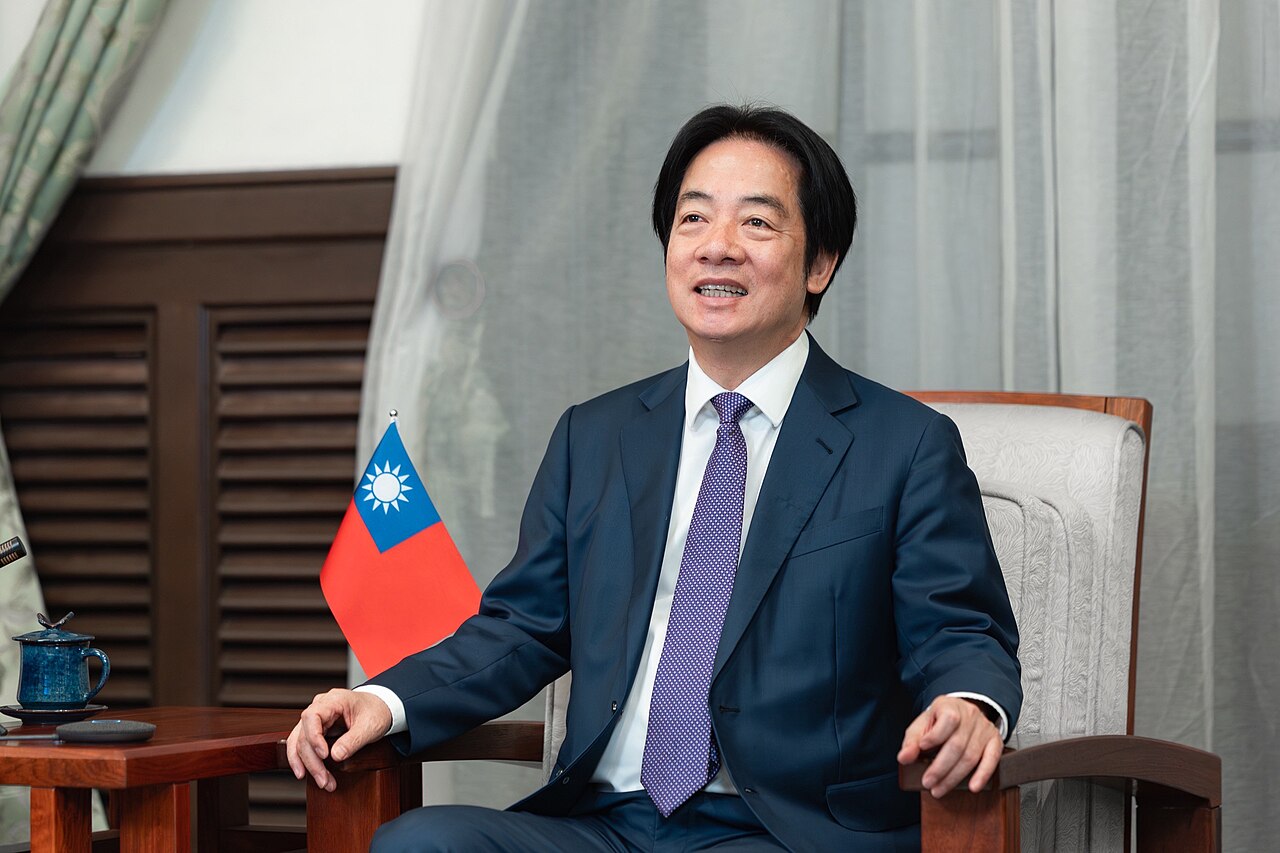
Taiwan said President Lai Ching-te would welcome direct talks with U.S. President Donald Trump, signaling a potentially historic moment in U.S.-Taiwan relations. If the conversation happens, it would mark the first direct communication between sitting leaders of the United States and Taiwan since Washington shifted diplomatic recognition from Taipei to Beijing in 1979.
The possibility of a Trump-Lai discussion comes amid rising tensions between China and Taiwan and growing debate over U.S. military support for the self-governed island. Trump recently mentioned twice that he intended to speak with Lai, removing speculation that his earlier remarks following a summit with Chinese President Xi Jinping were accidental.
Taiwan’s foreign ministry stated that Lai is prepared to discuss regional peace, cross-strait stability, and China’s increasing military pressure in the Indo-Pacific region. Officials emphasized that Taiwan remains committed to maintaining the status quo in the Taiwan Strait while strengthening communication with democratic allies.
Joseph Wu, secretary-general of Taiwan’s National Security Council, urged caution and said the government would keep a “low profile” until more concrete developments emerge. Wu also argued that China, not Taiwan, is responsible for rising instability across the first island chain stretching from Japan through Taiwan to the Philippines.
The development could also affect a major U.S. arms sales package reportedly worth $14 billion. Trump is currently considering approval of the defense deal following his recent meeting with Xi in Beijing, where Taiwan was a central topic. Taiwan Defense Minister Wellington Koo said the United States continues to support Taiwan under the Taiwan Relations Act, which requires Washington to provide the island with defensive capabilities.
China has repeatedly criticized U.S. arms sales to Taiwan and continues to reject offers of dialogue from Lai, labeling him a separatist. Taiwan’s government strongly rejects Beijing’s sovereignty claims and insists only the Taiwanese people can decide their future.