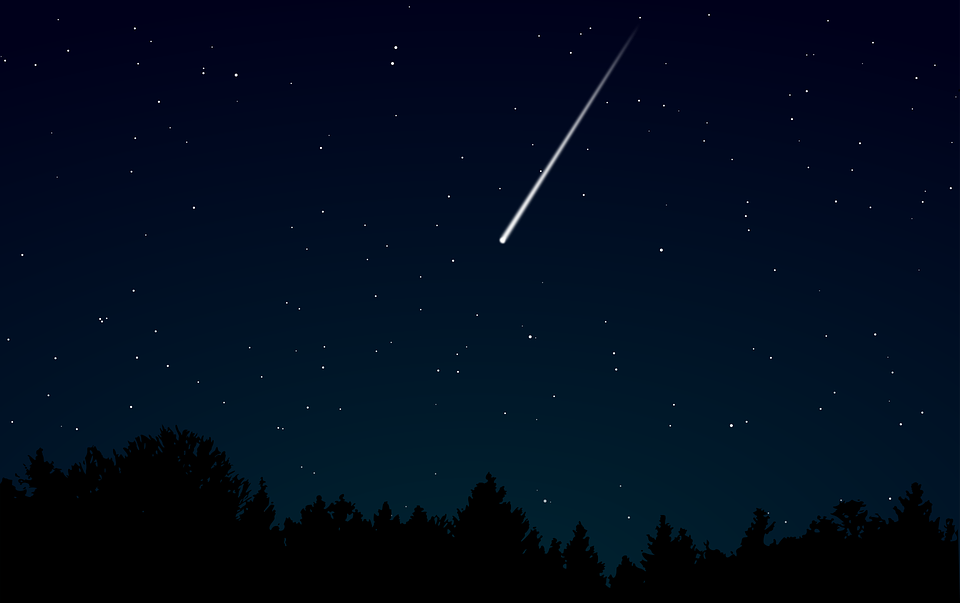
Among the amazing phenomena that could be seen up in the sky is in the form of meteor showers. Many celestial being enthusiasts might look forward to the upcoming meteor shower by the Geminids next week.
It is surprisingly a frequent occurrence that meteor showers happen in the sky. However, there is a chance to witness a meteor shower happen and Express reports that it is the Geminids, also known as the King of Meteor Showers, that will be lighting up the sky next week. As to when it will happen, NASA says that it will be seen in the skies on the 14th December, when the meteor shower is at its peak.
Although this event is something to look forward to, there may still be instances such as the moon that might get in the way of the shooting stars appearing. Nevertheless, people can look forward to seeing up to 100 meteors per hour.
The Geminids asteroids come from the supposedly extinct comet known as 3200 Phaethon, which was first seen back in 1983. This space rock was labeled as potentially hazardous by NASA when it was first sighted passing by Earth, due to measuring five kilometers in width. It would be as big as the asteroid that was responsible for the extinction of the dinosaurs 66 million years ago.
But the Geminids meteor shower is not the only shooting star event this December. Telegraph reports that the Ursids meteor shower is also going to take place this year, with its peak days on the 21st and 22nd December, just in time for the Christmas season. The Ursids meteorites are known to produce up to 10 asteroids per hour but it is possible that there may be more, as it seems to be an unpredictable kind of meteor shower
As long as the conditions are ideal for stargazing, many might be able to witness the meteor showers that are going to happen in the last few weeks of 2019. A moonless sky is the most ideal situation as it allows people to see the meteors more clearly. The ideal time is between midnight and in the darker hours of the morning.