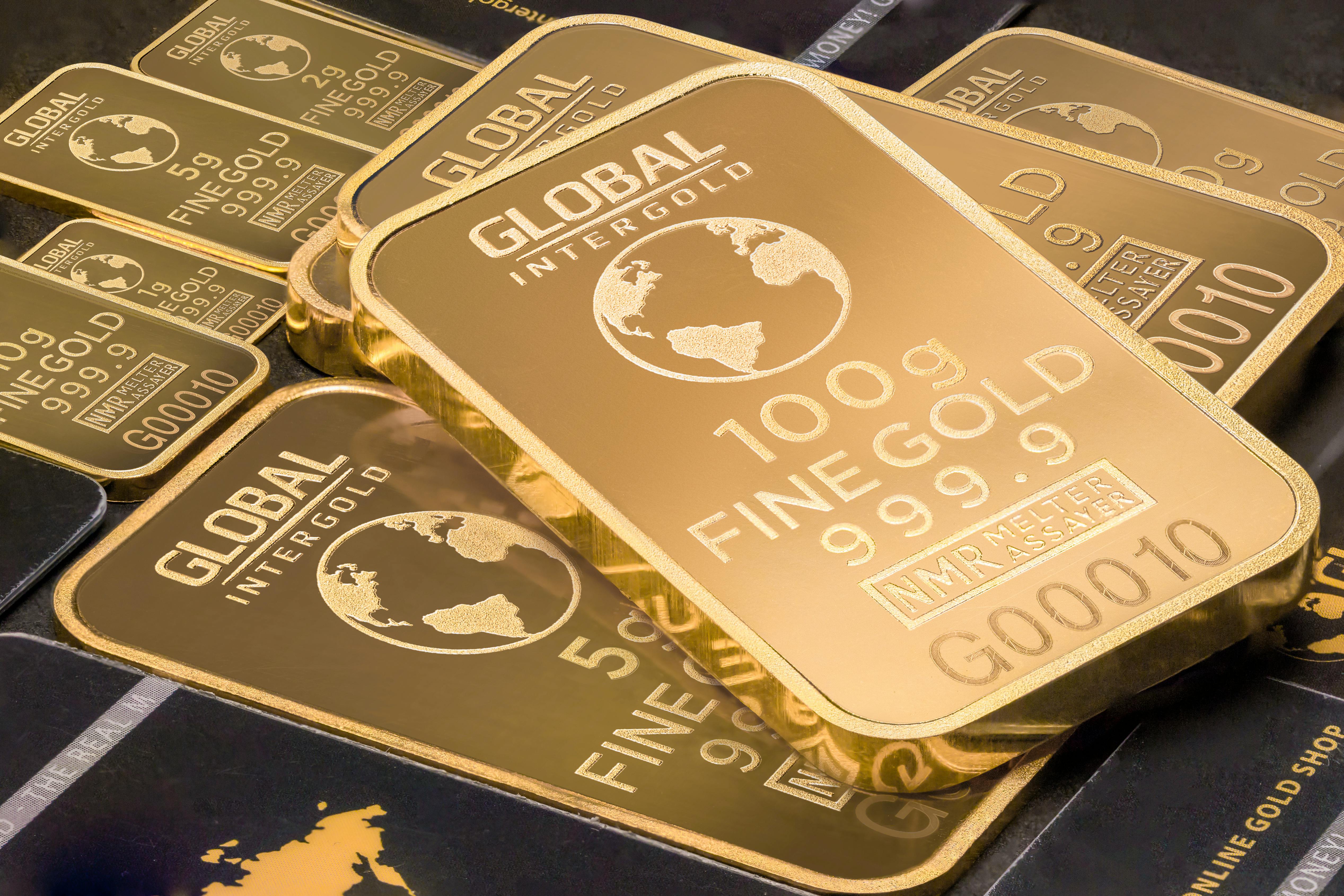
Gold prices posted modest monthly gains in July, supported by a weaker U.S. dollar and the Federal Reserve’s decision to keep interest rates unchanged. However, renewed inflation concerns fueled by rising oil prices limited bullion’s upside.
Spot gold settled 1.5% lower on Friday at $4,044.61 per ounce, while gold futures declined 1.5% to $4,098.60 per ounce. Despite the daily losses, spot gold finished July up 0.9%, while futures gained 1.5%, ending a four-month losing streak.
The U.S. dollar weakened more than 1% during July, with most of the decline occurring this week. A softer dollar typically boosts gold demand by making the precious metal more affordable for overseas buyers.
Recent U.S. inflation data for June, including the Consumer Price Index (CPI), Producer Price Index (PPI), and the Federal Reserve’s preferred Personal Consumption Expenditures (PCE) index, came in below expectations. However, much of the cooling inflation was attributed to lower oil prices in June.
That outlook shifted after oil prices rebounded in July following the collapse of an interim peace agreement between the United States and Iran, raising concerns that inflation could accelerate again.
The Federal Open Market Committee (FOMC) ultimately left interest rates unchanged, but the meeting highlighted growing divisions within the central bank. Cleveland Fed President Beth Hammack, Minneapolis Fed President Neel Kashkari, and Dallas Fed President Lorie Logan all voted in favor of a 25-basis-point rate hike, citing persistent inflation risks.
Markets were also looking for clearer guidance from Fed Chair Kevin Warsh on the central bank’s inflation strategy. Instead, investors were left with more uncertainty, while Treasury yields climbed sharply during July, reflecting expectations that tighter monetary policy could still be ahead.
The three dissenting Fed officials later reiterated that inflation remains their primary concern. JPMorgan Chief U.S. Economist Michael Feroli said Warsh’s comments raised questions about the Fed’s commitment to restoring price stability, prompting the bank to move forward its forecast for the next rate hike to December 2026 from the second half of 2027. JPMorgan also warned that September remains a possibility if inflation pressures intensify further.