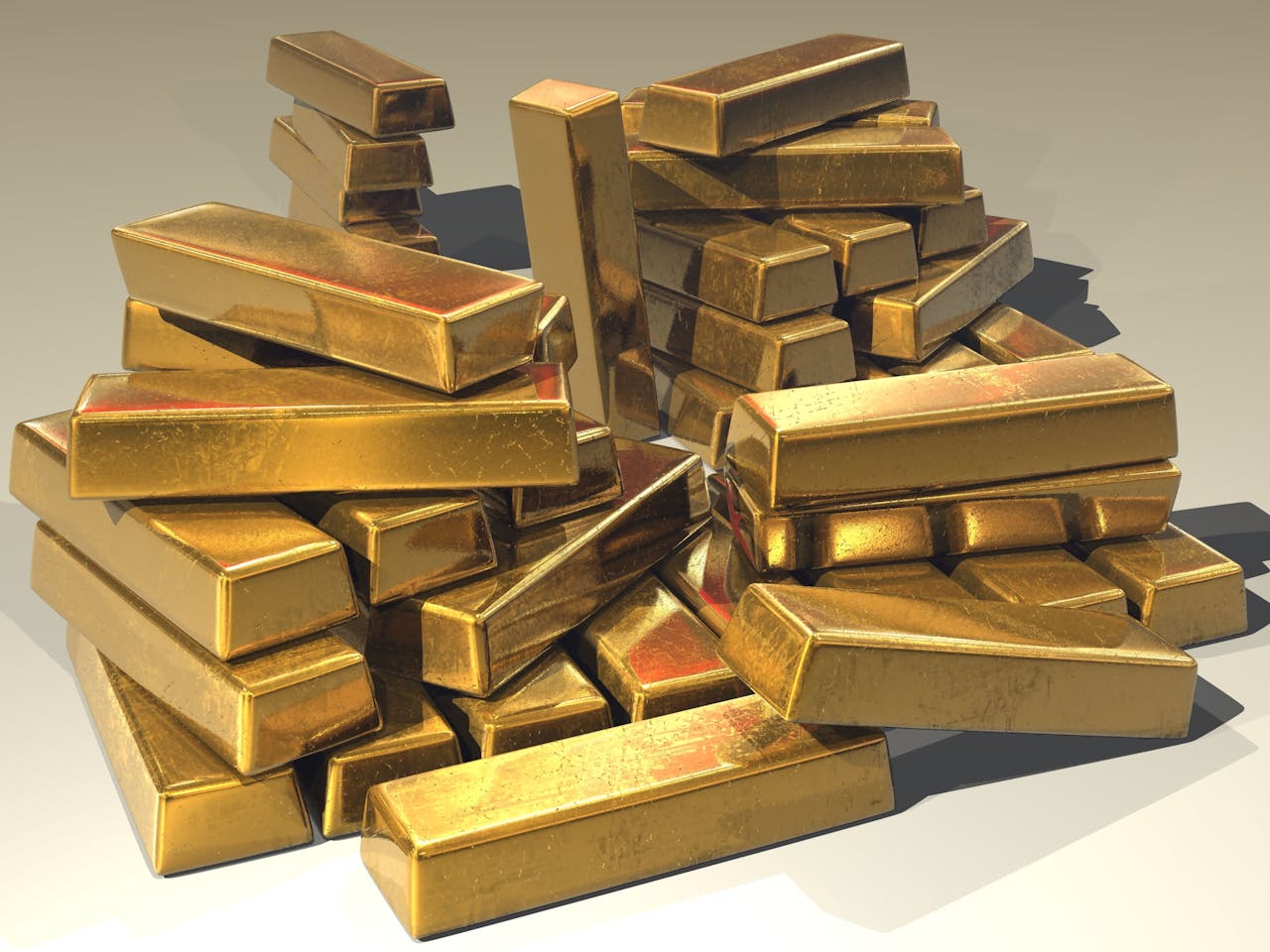
Gold and silver prices edged lower in Asian trading on Tuesday as investors booked profits after a strong rally, while global markets turned cautious ahead of critical U.S. economic data. The pullback comes after precious metals surged sharply over the past week, supported by a recent U.S. interest rate cut, dovish signals from the Federal Reserve, and growing macroeconomic uncertainty.
Spot gold slipped 0.4% to around $4,289 per ounce, while February gold futures fell 0.5% to near $4,315 per ounce. Despite the decline, gold prices remain near record highs, reflecting sustained demand for safe-haven assets amid concerns over global growth, U.S. fiscal health, and liquidity conditions. Spot silver saw a steeper drop, sliding nearly 2% to about $62.86 per ounce, as the metal appeared more vulnerable to profit-taking after posting multiple record highs last week. Silver futures also declined, though losses were relatively contained.
Other metals showed mixed performance. Platinum stood out as a notable gainer, rising more than 1% to an over 14-year high above $1,810 per ounce, driven by supply constraints and strong industrial demand. Meanwhile, copper prices weakened, with benchmark London Metal Exchange futures falling close to 1% to around $11,581 per metric ton, pressured by concerns over slowing Chinese economic growth.
Investor focus is now firmly on upcoming U.S. economic indicators, starting with nonfarm payrolls data, which is expected to signal further cooling in the labor market. This will be followed by U.S. consumer price index inflation data later in the week, a key input for Federal Reserve policy decisions. Labor market strength and inflation trends remain central to the Fed’s data-driven approach, and softer readings could reinforce expectations of lower interest rates.
Lower U.S. rates typically support non-yielding assets like gold and silver, helping explain their strong gains so far this year. Looking ahead, analysts at ANZ project that gold prices could surpass $5,000 per ounce in 2026, citing rising geopolitical risks, fiscal concerns in developed economies, and declining confidence in U.S. assets. While the pace of gains may slow after 2025’s rally, the broader outlook for precious metals remains bullish.