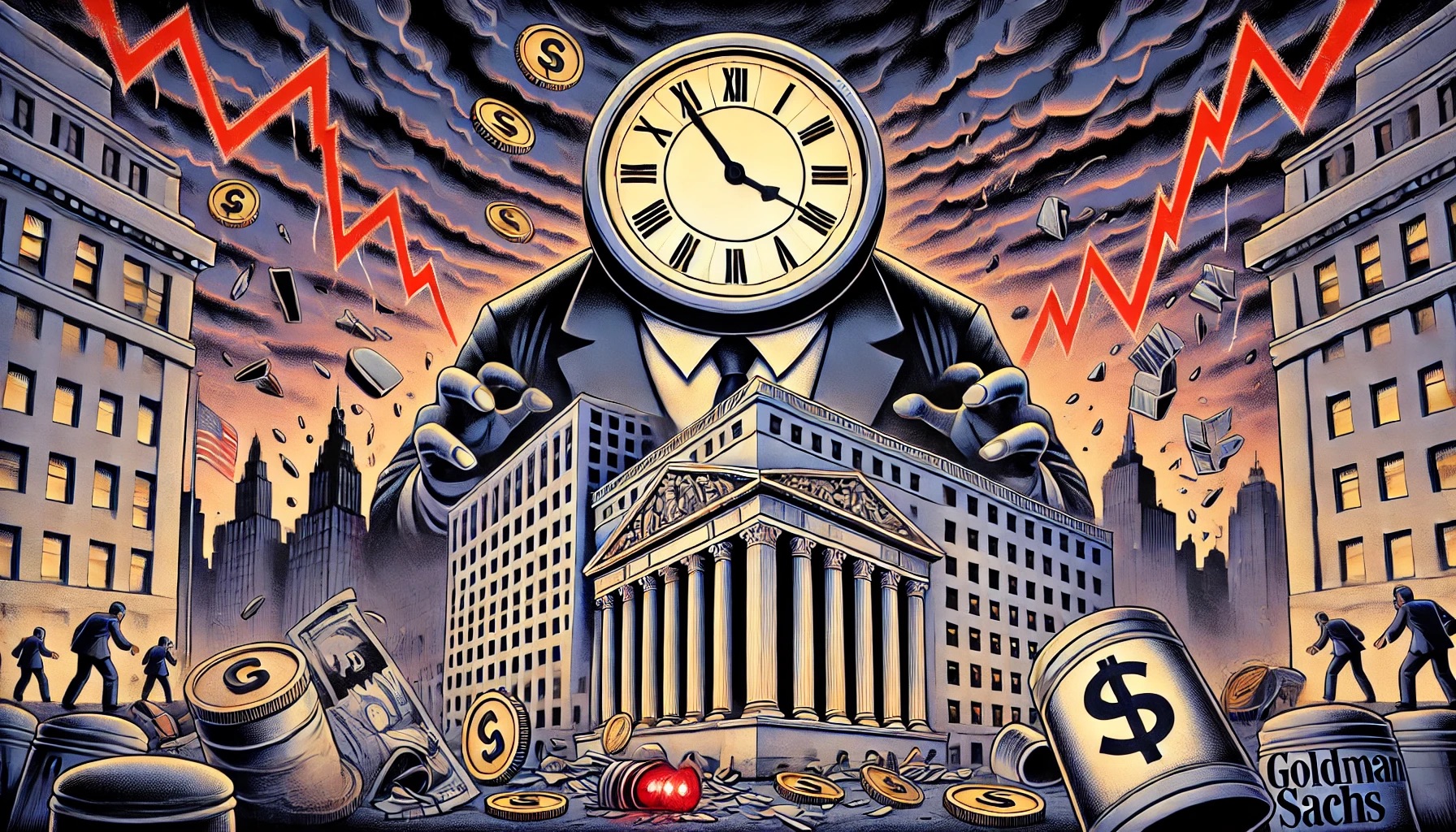
Goldman Sachs has flagged rising risks of a U.S. government shutdown after the House rejected a key spending package, raising concerns as the December 20 deadline approaches. The proposal’s failure, tied to a two-year debt limit suspension, has deepened the fiscal impasse in Congress.
Shutdown Risks Intensify Amid House Rejection of Spending Package
Investing.com reports that an increased likelihood of a government shutdown in the United States was pointed out by Goldman Sachs after the House of Representatives rejected a revised spending package and a suspension of the debt limit for two years.
With 38 Republicans voting against the measure and just two Democrats in its favor, it was ultimately defeated by a score of 174 to 235. According to Goldman Sachs, there is a higher chance of missing the deadline as the present funding is slated to expire at midnight on December 20.
Goldman Sachs identified a provision that would have suspended the debt limit until January 30, 2027, as a critical point in the failed spending bill.
Debt Limit Suspension Remains Contentious
“The revised package that failed to pass included a 2-year debt limit suspension (until Jan. 30, 2027). While this was one of many changes from the prior bipartisan agreement, it was likely the primary reason the bill failed,” according to the analysts.
According to the bank, the upcoming president's demands for a debt-limit suspension might make efforts to prevent a government shutdown more difficult unless the bill's Republican opponents change their minds.
Goldman Sachs is cautiously optimistic despite the loss. "Congress has managed to pass last-minute extensions before, and the upcoming recess is likely to motivate lawmakers to reach a deal soon," the analysts wrote, adding that "a protracted shutdown still appears unlikely."
Possible Solutions to Avert Shutdown
According to Goldman Sachs, there are two ways forward: either Republicans and Democrats might bargain to raise the debt ceiling in exchange for additional policy concessions, or Congress could approve a temporary funding extension, postponing the debt-limit discussion to a later date.
Goldman Sachs predicts the Treasury will have enough money to pay its bills until the middle of next year, even though the debt limit was officially reinstated on January 2, 2025.
"We still don't think a long shutdown will happen," the bank said.