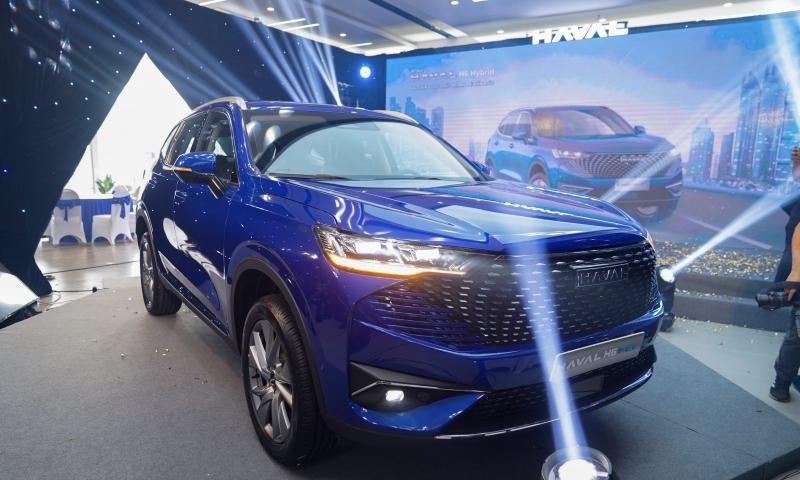
China's Great Wall Motor has formally submitted its responses to the European Commission's anti-subsidy investigation on Chinese-made electric vehicles (EVs). The automaker aims to address the growing tension between China and the EU.
According to Reuters, the recent geopolitical developments following Russia's invasion of Ukraine have strained China-EU relations, with the bloc seeking to reduce dependence on the world's second-largest economy during its push for a green transition.
Great Wall Motor's Stand on Fair and Open Trade
President Mu Feng voiced the company's aspirations for a fair and open trade environment on his Weibo social media account. Great Wall Motor expressed confidence in its ability to compete globally, highlighting the necessity of fairness in the trade landscape.
The company, the first automaker to submit its responses on October 11, stated that Europe is a key strategic market for them. They have also started site selection efforts for a European plant, aiming for full production and sales capabilities.
The European Commission's Investigation and Tariff Barriers
The investigation initiated by the European Commission aims to determine whether tariff barriers should be imposed against Chinese EV imports benefiting from state subsidies. European Commission President Ursula von der Leyen raised concerns over the influx of cheaper Chinese EV imports and the potential consequences for the European market.
According to Republic World, the probe encompasses EVs manufactured by Chinese companies and foreign firms such as Tesla, BMW, and Renault operating in China.
China's Response and Concerns
China has criticized the European Union's short consultation period for the inquiry, alleging insufficient evidence and a violation of World Trade Organization (WTO) rules. Meanwhile, Chinese automakers BYD, Xpeng, and Nio are eyeing expansion into overseas markets, inspiring European carmakers to catch up with China in producing cost-effective EVs.
Industry figures reveal that Great Wall Motor ranks eighth in China's pure electric and plug-in hybrid car sales. Recognizing the significance of the European market, the automaker has outlined plans to establish a plant in Europe, with Germany being one of the potential locations. Their vision encompasses a comprehensive approach from production to sales, solidifying their regional commitment.
The outcome of the investigation and subsequent decisions regarding tariff barriers will have far-reaching implications for trade relations between China and the European Union. While the EU aims to reduce reliance on China, Chinese automakers are expanding globally and potentially disrupting the European market's dynamics.
Photo: Great Wall Motor Newsroom