


 NEAR Intents Hack Drains $3.8 Million, NEAR Price Falls 7.5%
  XRP Ledger Hits 10 Million AI Payments as Bitcoin Retreats
  Midnight NIGHT Token Surges 86% as Smart Contract Launch Nears
  Chainalysis AI Traces $387M Bitget Hack in Under 10 Minutes
  Zcash Awards $8 Million in Grants After Orchard Bug Crisis
  XRP Rises as Evernorth Merger Vote Clears Key Nasdaq Hurdle
  AI Agents Could Disrupt Financial Services, Bernstein Says
  WordPress Malware Uses Ethereum to Evade Removal
  MSTR Stock Rises 3% as Strategy Challenges MSCI Bitcoin Stance
  AAVE, PUMP, WLD and SKY Rally as Crypto Market Slips
  Bitcoin Posts 42.7% Q3 Gain as ‘Uptober’ Begins Amid Crypto Turmoil
  Goldman Sachs Names CATL, Zenergy Top China Battery Picks
  Crypto Rallies as CLARITY Act Failure Opens Door to Faster SEC Rules
  Robinhood Stock Nears $114 as Jobs Data Boosts Risk Appetite
  Cardano Price Struggles as NIGHT Token Surges 20%
  Evernorth Set for Nasdaq Debut With 473 Million XRP Treasury


 Add as a preferred source on Google
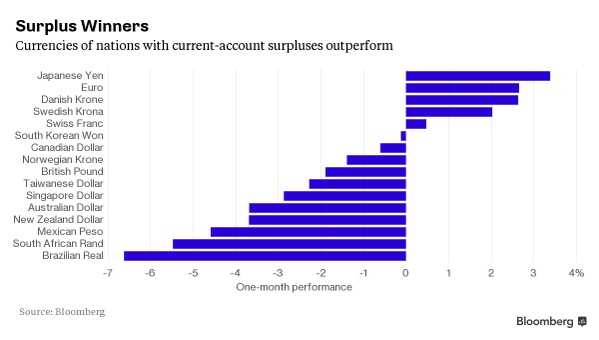
Latest analysis from Bloomberg shows that traders and investors' in latest financial market turmoil are preferring to perk their money to surplus currencies.
The chart shows, in past month alone Japanese Yen, a significant current account surplus economy, rose more than 10% against Brazilian Real, a significant deficit economy.
Taper tantrum of 2013, showed similar trend, when investors refused to finance emerging economies' large current account and fiscal account deficit, pushing currencies lower across emerging markets.
In the past one of the FxWirePro report from us showed how fundamental strategies are working best since post crisis and we expect that old book's such as buy surplus, sell deficit are likely to perform well over the next couple of quarters.
- In spite of European Central Bank's massive quantitative easing, which is pushing Euro down against all most all currencies remains a buy due to its large current account surplus and reforms to manage it fiscal deficit going ahead.
- Weaker Euro is improving the odds of better recovery across Euro zone.
In spite of China's large current account surplus, it is not likely to benefit from haven flows as the outlook going ahead is much weaker.







