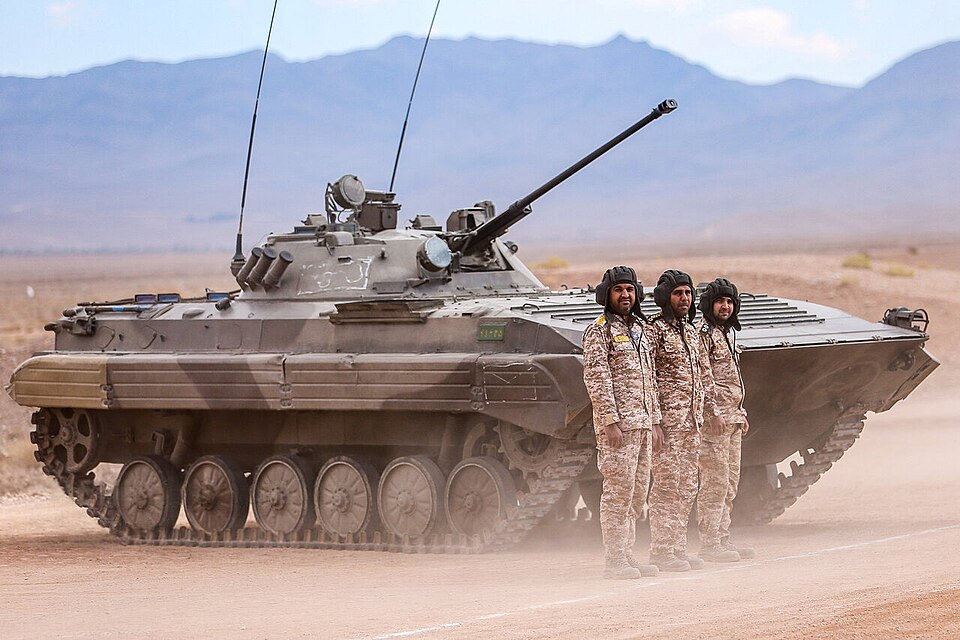
Iran’s Islamic Revolutionary Guard Corps (IRGC) has reportedly established covert armed cells in Iraq to launch attacks against Gulf countries hosting U.S. military forces, according to multiple Iraqi security and militia sources cited by Reuters. The move signals a significant shift in Iran’s regional strategy as it seeks to maintain influence across the Middle East while facing mounting military and economic pressures.
Sources said the IRGC created several small, highly trained units composed of elite Iraqi Shi’ite fighters. Operating independently from established Iran-backed militia groups, these cells allegedly report directly to the IRGC and have carried out multiple drone attacks targeting locations in Kuwait, Saudi Arabia, and the United Arab Emirates between April and May. Launch sites were reportedly located in remote desert areas near the Iraqi cities of Basra and Samawa.
Unlike the larger Islamic Resistance in Iraq coalition, which has publicly claimed attacks against U.S. interests in the region, these new groups are designed to operate discreetly and provide Tehran with greater deniability. Iraqi officials believe the strategy helps shield major Iran-aligned militias from international scrutiny while reducing pressure on Baghdad to disarm them.
The development comes as several influential Iraqi Shi’ite factions signal a willingness to surrender weapons and focus on domestic politics. Groups such as Asaib Ahl al-Haq and the Imam Ali Brigades recently announced plans to hand over arms to state authorities following repeated U.S. calls for Iraq to dismantle armed organizations operating outside government control.
Security officials said the drone strikes targeted strategic sites, including Kuwait’s Ali Al Salem Air Base, where American forces are stationed. Additional attacks aimed at Saudi Arabia and the UAE were reportedly intercepted. Iraqi authorities are also investigating whether one of the groups was involved in a drone strike linked to a fire at the UAE’s Barakah Nuclear Power Plant.
The emergence of these IRGC-backed cells presents a major challenge for Iraq’s new Prime Minister Ali al-Zaidi, who faces increasing pressure from both Washington and Tehran. Analysts warn that continued attacks from Iraqi territory could threaten regional stability, strain Iraq’s improving relations with Gulf nations, and further complicate efforts to balance relations between the United States and Iran.