India’s latest Union Budget placed manufacturing firmly at the center of its economic strategy, prioritizing key sectors such as semiconductors, biopharma, electronics, renewables, and capital goods. While the government emphasized long-term industrial growth and resilience amid rising geopolitical tensions, investors were left underwhelmed by the lack of bold structural reforms, triggering a sharp sell-off in equity markets.
Indian stock markets reacted negatively on budget day, with the Nifty 50 falling nearly 2% and the BSE Sensex dropping close to 1.9%, marking the worst budget-day performance in six years. Market sentiment was further dampened by a significant hike in the securities transaction tax on derivatives, which raised costs for futures and options trading and spooked traders.
Despite global headwinds, including a 50% U.S. tariff on select Indian goods, India’s economy has remained relatively resilient. Gross domestic product growth is projected at a healthy 7.4% for the financial year ending March 31, 2026. However, foreign investor confidence has weakened, with overseas investors selling a record $22 billion worth of Indian equities since January last year, while the rupee has slid to historic lows.
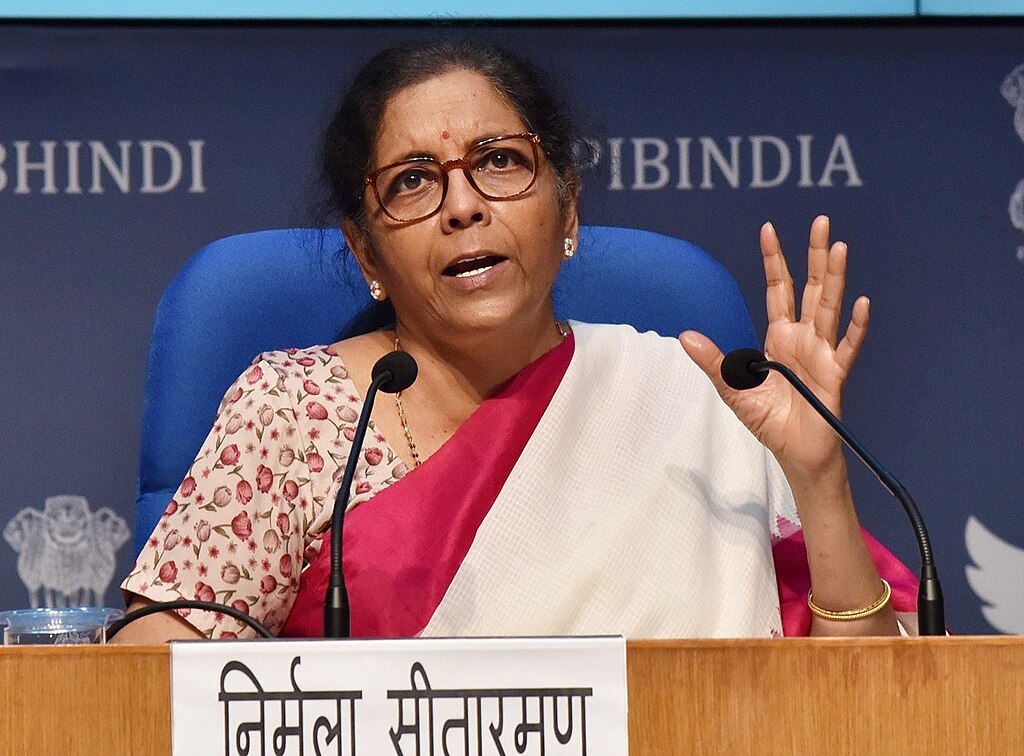
Finance Minister Nirmala Sitharaman announced several measures to support manufacturing, including tariff cuts on capital goods and a doubling of the electronics manufacturing incentive scheme to 400 billion rupees. She also eased rules for foreign companies such as Apple, allowing them to supply machinery to Indian contract manufacturers without tax risks. The government committed to scaling up manufacturing across seven strategic sectors, aiming to strengthen domestic supply chains.
On the fiscal front, total government spending was raised to 53.5 trillion rupees, with capital expenditure increased to 12.2 trillion rupees. The fiscal deficit target was set at 4.3% of GDP, signaling continued fiscal consolidation. Defence spending rose modestly by 6%, below market expectations, while government borrowing from bond markets is planned at 17.2 trillion rupees.
Economists and rating agencies described the budget as tactical rather than transformative, noting that while it supports manufacturing, it lacked the firepower needed to immediately revive market confidence and private investment.