


 France to Release 10 Million Barrels of Diesel to Ease Fuel Prices
  US Dollar Near 18-Month High Ahead of Inflation Data
  US-Led Coalition Targets Global Factory Overcapacity
  FxWirePro: Daily Commodity Tracker - 21st March, 2022
  Asian Stocks Mixed as OpenAI Revenue Concerns Hit Chipmakers
  Gold Prices Hit One-Week High as Oil Falls, Fed Rate Outlook Weighed
  UK Finance Minister Healey Calls for Fiscal Discipline Amid Global Risks
  Oil Prices Rise as Houthi Attacks Threaten Middle East Supply


 Add as a preferred source on Google
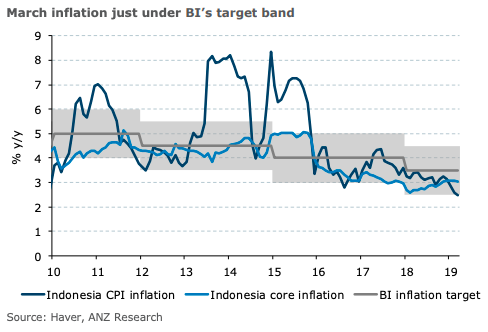
Indonesia’s headline inflation eased for a fourth straight month in March, and at 2.48 percent y/y, is just below Bank Indonesia’s (BI) 2.50-4.50 percent target band. Most major components saw a slight pullback, with housing the key exception. Core inflation also edged down.
The slowdown in headline inflation in March was largely broad-based and partly reflect higher base effects. Housing prices was the only major category that saw a faster pace of increase in y/y terms.
In sequential terms, headline CPI rose 0.11 percent m/m, reversing the 0.08 percent fall in February. The increase mainly reflected a faster pace of increase in transport prices and a slower decline in food prices. The m/m increase in core CPI slowed to 0.16 percent m/m (from 0.26 percent), which translated to a 3.03 percent y/y rise in March.
Softening inflation on its own is unlikely to trigger imminent policy easing by BI, given that its main focus remains on external resiliency.
Given BI’s focus on external stability, however, policymakers are unlikely to react to the softening inflation numbers with imminent policy easing, the report added.
"Our base case is for BI to maintain a wait-and-see stance in 2019 and rely on other accommodative macroprudential measures to support economic activity instead. Should we see a sustained improvement in the trade balance, coupled with rupiah stability, we will reassess our forecast," ANZ Research further commented.







