


 Wall Street Falls as Fed Minutes Signal Another Rate Hike
  Crypto Market Selloff Wipes Out $100B as Bitcoin Falls Below $83K
  Oil Prices Rise as Hormuz Risks Offset IEA Stock Release
  Gold Prices Fall Amid Rate Jitters; Copper Steady as China Stimulus Eyed
  FxWirePro: Daily Commodity Tracker - 21st March, 2022
  Gold Prices Rise as Hormuz Tensions Fuel Inflation Risks
  Dollar Near 18-Month High as Euro, Yen and Pound Weaken


 Add as a preferred source on Google
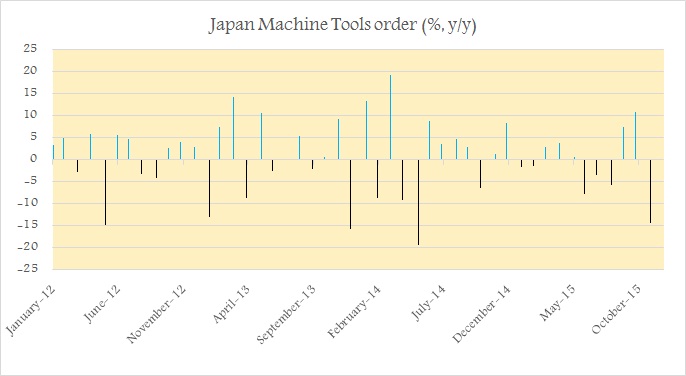
Abenomics, which is set of policies introduced in Japan, which includes ambitions such as bringing inflation back in Japan, increase sales tax to balance budget might be losing its charm, at least November's Machine tools orders, which is synonymous to capital expenditure in Japan, would say so.
In November, Japanese Machinery orders recorded, sixth decline for the year. Though the data is usually volatile and moves on both side of zero, regularly, a double digit decline is relatively rare. November's 14.4% decline is biggest since May, 2014 and third double digit decline in last five years or more.
Machinery orders till November has declined in six of the 11 months and drop has been much more frequent and large since 2014, posing considerable doubts on Abenomics' ability to boost back growth.
On the other hand, despite Bank of Japan's (BOJ) sincerest efforts and purchase of ¥80 trillion assets per annum falling far short of boosting inflation. Consumers have cut back on purchases in response to higher price.
According to last night's data, corporate goods price dropped -0.3% in December, down -3.4% from a year ago.
Nikkei dropped sharply in response to bad data, at once point was down as much as 4%, while Yen is relatively strong, trading at 117.8 per Dollar.







