“Read Jane Eyre if you dare” warned papers recently. The Daily Mail had sent a request for information to Salford University and subsequently claimed that the institution had issued “trigger warnings” on a literature module that included Charlotte Brontë’s Jane Eyre and Charles Dickens’s Great Expectations.
The Daily Mail article quoted Conservative MP Andrew Bridgen who noted that “generations of children have been able to cope” with reading these novels “without being damaged”. The argument appears to be based partly on the fact that many of these books have been the subject of [film and TV adaptations] “aimed at family audiences”.
In The Telegraph, journalist Celia Walden also criticised the “trigger warning” saying: “just last week, I started reading Jane Eyre to my 10-year old daughter”.
But labelling Jane Eyre as a dangerous text is nothing new - and it certainly wasn’t recommended for children when it first appeared.
A dangerously addictive text
When Jane Eyre was first published in 1847, it was generally agreed to be unputdownable. Brontë biographer Claire Harman describes how the publisher WS Williams missed meals and appointments to read the book in a single day. The novelist William Makepeace Thackeray recalled that he had “lost (or won if you like) a whole day in reading it” and even Queen Victoria found it “intensely interesting”.
Another novelist and reviewer, Margaret Oliphant later noted that in reading Jane Eyre, “we are swept on the current and never draw breath till the tale is ended.” For Oliphant, though, this wasn’t necessarily a good thing. “This impetuous little spirit,” she wrote, has “dashed into our well-ordered world, broke its boundaries, and defied its principles — and the most alarming revolution of modern times has followed the invasion of Jane Eyre.”
Oliphant’s concern was partly over the influence the book might have on other writers, leading them to come up with similarly sensational plots and characters. But there was also a sense among some parents that Jane Eyre was not a book to give to your daughters.
Thackeray loved the book, but his daughter Anny recalled that his children were not “given Jane Eyre to read”. Instead, they had “taken it away without leave” and read it in secret.
The novelist Elizabeth Gaskell – Charlotte’s friend and later biographer – banned her eldest daughter from reading the book until she was 20, Lucasta Miller suggests in The Bronte Myth.
The appeal of the disreputable novel
Why was the novel considered inappropriate for young girls, in particular?
Many Victorians considered it “coarse and immoral”. Not only might the book encourage young girls to lust after darkly dangerous figures like Edward Rochester, it also seemed to promote rebellion through its orphan heroine who insists on her own worth and does not express gratitude for the “charity” extended to her.
The novel’s addictiveness might also have been an issue.
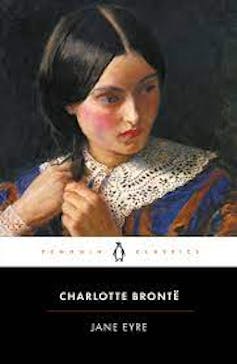
Victorian parents were worried that Brontë’s sensational book would corrupt their daughters. Penguin Classics
The American reviewer EP Whipple coined the term “Jane Eyre fever"in 1848. Whipple satirically compared the way the novel had spread through the youth of America leaving "fathers and mothers much distressed”. The effects would have been less severe, Whipple suggested, if “some sly manufacturer of mischief” had not “hinted that it was a book no respectable man should bring into his family circle”.
In response to the Daily Mail’s request, a spokesperson for Salford commented that the university does not give “trigger warnings” but rather includes “content notes” on reading lists, which “give students the opportunity to have a discussion with their lecturer in advance if they wish to do so”.
The reading list in question also contained Christina Rossetti’s poem “Goblin Market”(1862), and Robert Browning’s “Porphyria’s Lover” (1836). Rossetti’s poem contains a sustained assault on a young woman by ferocious goblins, and Browning’s recounts the inner dialogue of a man before and during the moment he strangles his lover.
As Whipple hinted, it may be that rather than warning students off Jane Eyre and these other texts, such a label might single the novel out (unfairly) to student readers as being far more subversively exciting than its fellow Victorian counterparts – as has clearly been the case now for 150 years.