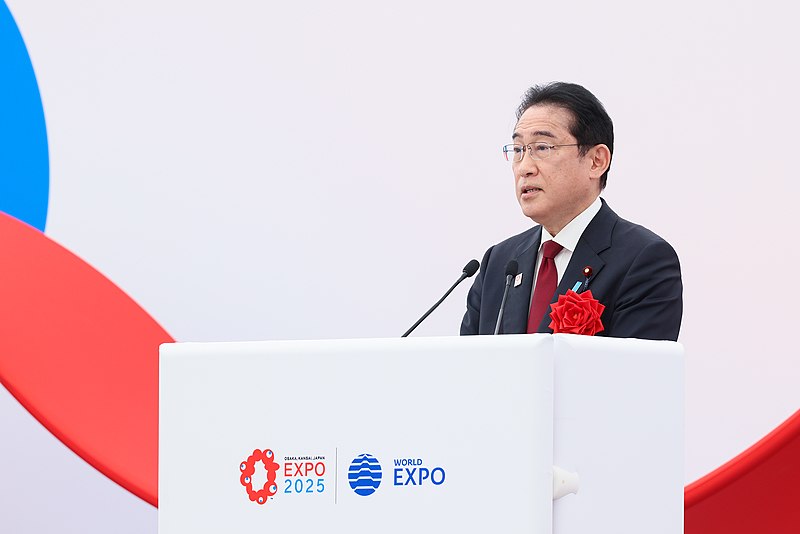
Japanese Prime Minister Fumio Kishida said his country would continue to call on China to act responsibly on the world stage. This highlights Tokyo’s increasing concerns over the situation surrounding Taiwan and the Taiwan Strait.
Kishida told members of the media during a roundtable interview on Thursday that Japan will continue calling on China to act more responsibly as a major power on the world stage. Kishida also stressed the importance of peace and stability in the Taiwan Strait to the international community as a whole. This marks the latest indication of Japan’s increasing concerns over the waterway and the island nation which China claims as its territories.
“Peace and stability in the Taiwan Strait is not just important for Japan, but the international community and the world more broadly as well,” said Kishida.
“We have been consistent with our position on Taiwan that any issues should be resolved peacefully through dialogue. In any case…we will comply with our constitution, international laws, and domestic laws including the relevant defense laws,” said Kishida.
China views Taiwan as its territory ad has not ruled out using military force to take control of the island and its democratic government. Taiwan has repeatedly rejected Beijing’s claims, saying that only the Taiwanese people can decide the island’s future. Kishida’s comments follow recent Chinese military drills in the waters close to Taiwan earlier this month.
Kishida’s comments also follow the recent meeting of foreign ministers of the G7 countries in Japan this week. The group called on China to refrain from “threats, coercion intimidation, and use of force.”
Earlier this week, Japan also participated in joint military exercises with the United States and South Korea in light of the rising threats coming from North Korea with its nuclear and missile programs. The drills followed talks in Washington last week between the defense and diplomatic officials of the three allies, where they agreed to regularly hold regular missile defense and anti-submarine exercises in an effort to boost diplomatic and military cooperation.
Pyongyang has maintained that its nuclear and missile programs are a self-defensive measure against threats posed by the US while accusing Washington of escalating regional tensions with drills simulating an all-out military conflict with North Korea.