


 Flavio Bolsonaro Backs Brazil’s 40-Hour Workweek Reform Ahead of Runoff
  India Voter List Protests Reach Supreme Court as Opposition Demands Election Chief's Resignation
  North Korea Fires Ballistic Missiles Amid Rising Tensions With South Korea
  US Justice Department Drops Prosecution of Ex-CIA Analyst Sue Mi Terry
  Trump Denies China, Russia Are Helping Iran in War
  China Warns Taiwan Over South China Sea Coast Guard Incident
  US Senate Midterms 2026: Key Races That Could Flip Control
  US Supreme Court Denies Release of Anti-ICE Activist Kyle Wagner
  NATO Commander Warns Russia of Devastating Response to Attack
  Trump Defends Russian Diesel Deal Amid US Sanctions Backlash
  US Condemns China Sanctions on Taiwan Allies Belize and Paraguay
  Trump Confirms US Intelligence Sharing With Ukraine Amid Russian Strikes
  Most Americans Oppose Election Betting on Prediction Markets, Poll Finds
  Trump Plans White House Shake-Up of Key AI Safety Agency
  Italy’s Meloni Warns US-Russia Diesel Deal Could Weaken Ukraine Sanctions
  SpaceX Starlink Restrictions Disrupt Ukraine Military Operations
  Greenland Lawmakers Back Trump Security Deal Despite Economic Concerns


 Add as a preferred source on Google
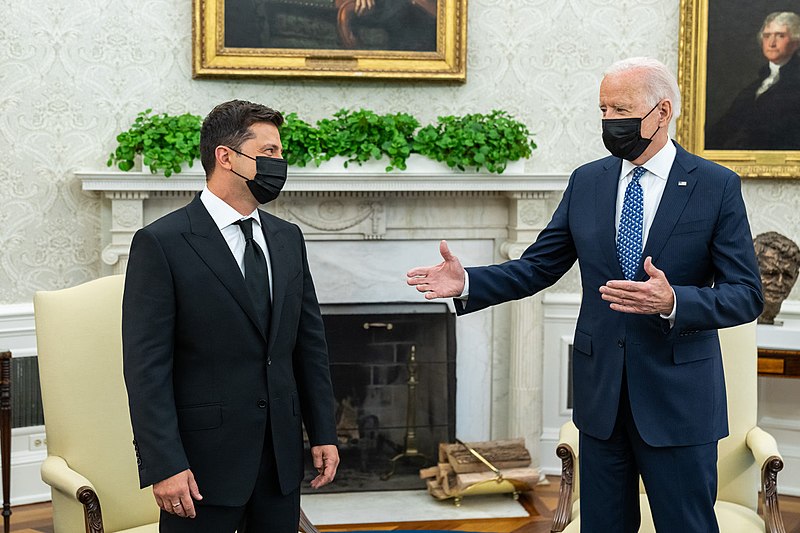
This week, US President Joe Biden met with Ukrainian President Volodymyr Zelensky at the White House. During the meeting, Biden assured his counterpart that the US will be a more reliable ally to the country moving forward.
Biden hosted Zelensky at the White House, in what appears to be a long-sought-after meeting between the two leaders, and Biden’s first meeting with the Ukrainian leader as president. Biden also assured Zelensky that the US remains an ally of Ukraine in the midst of tensions with Russia. The US leader also noted his concerns about the increasing aggression from Russia in the region, at the eastern border.
“The United States remains firmly committed to Ukraine’s sovereignty and territorial integrity in the face of Russian aggression and Ukraine’s Euro-Atlantic aspirations,” said Biden.
Zelensky, who was among the figures that were caught up in the first impeachment of Biden’s predecessor Donald Trump, came to Washington in the hopes of receiving more military aid and support for Ukraine becoming a NATO member country. The meeting was also postponed by two days as Biden and his national security team was overseeing evacuation efforts in Afghanistan. The withdrawal also raised questions among critics on whether the US remains to be a reliable country, which Biden tried to shut down in his assurance to Zelensky.
Prior to the meeting with Zelensky, the Biden administration said that it was allocating $60 million in new military aid to Ukraine. The administration also notified Congress of the importance of the aid for Ukraine, citing Russia’s increasing military presence in the region along with provocations that have been occurring.
Previously, Iran’s Supreme Leader Ali Khamenei criticized Biden, saying that he is no different from his predecessor, and also criticizing the US for its behavior towards the 2015 nuclear deal with the country. Khamenei called Biden a “predatory wolf” and that the US acts like Iran was the one who left the nuclear deal when the US withdrew from it in 2018. Khamenei added that the European countries that have also joined in the deal are no different from the US as well.
Khamenei’s comments come ahead of the upcoming meeting between Iran, the US, and other nations in Vienna over nuclear talks.







