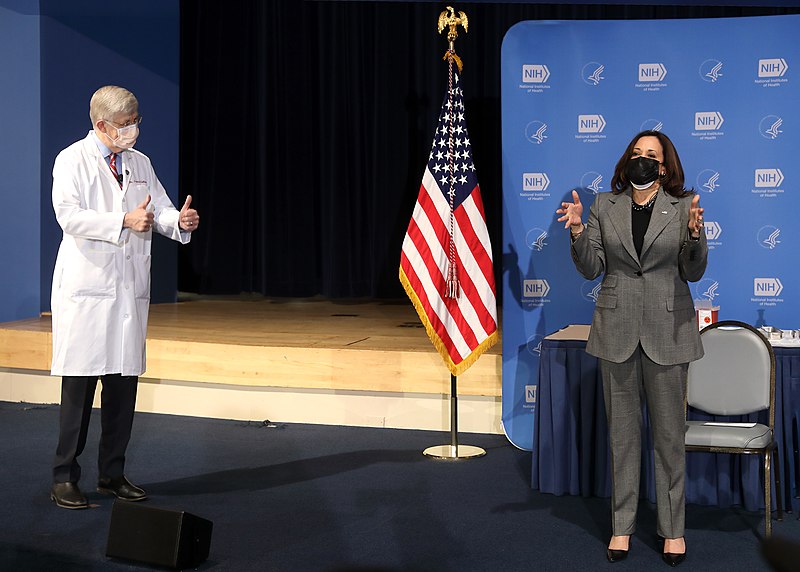
The Biden administration’s chief medical adviser Dr. Anthony Fauci contradicted the claim made by Vice President Kamala Harris on whether the administration anticipated variants of the coronavirus. While Dr. Fauci said that the administration anticipated variants, he noted that the Omicron variant’s potency was what they did not anticipate.
Speaking on CNN’s “State of the Union” over the weekend, Dr. Fauci responded to the interview Harris had with the Los Angeles Times, where she said that the administration did not anticipate the emergence of the Delta and Omicron variants of the coronavirus. The top medical adviser said that variants and mutations of the coronavirus were anticipated, but noted that the Omicron variant’s characteristics were unprecedented.
“What was not anticipated was the extent of the mutations and the amino acid substitutions in Omicron, that really is unprecedented and came out of nowhere,” said Dr. Fauci.
“When you have a virus that has 50 mutations, to me that really is unprecedented so that is something you would not have anticipated,” Dr. Fauci continued. “But we certainly were anticipating that there were going to be variants. Because when you have so much replication going on in the community, if you give a virus enough opportunity to replicate you know it’s ultimately going to mutate.”
In an interview with NBC, Dr. Fauci said that he believes Harris’s statements were taken out of context and was likely referring to the number of mutations of the coronavirus, especially the Omicron variant.
In other related news, Harris weighed in on the sudden announcement made by West Virginia Democratic Senator Joe Manchin, voicing his opposition to the Build Back Better bill that would target social infrastructure and climate. The Democratic-led bill, which has already passed the House, has yet to pass the evenly divided Senate. Manchin earned backlash from the White House for reversing his support for the bill, but Harris dismissed the notion that Manchin’s opposition was an act of betrayal against his discussions in the White House.
“I think the stakes are too high for this to be in any way about any specific individual,” said the vice president, who maintained that the bill will be passed.