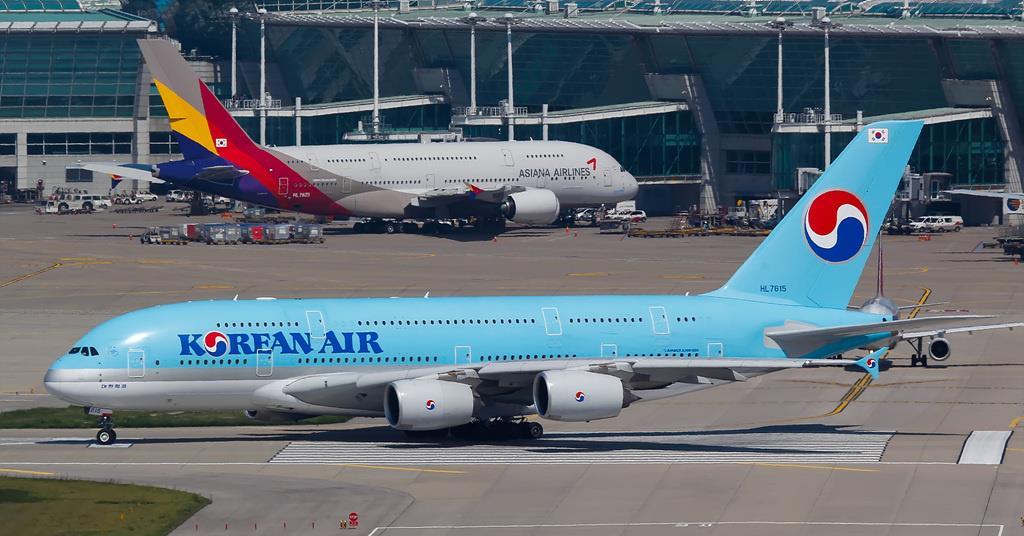
With Korean Air and Asiana Airlines having overlapping businesses, the focus of the merger plans is on how the two companies can integrate efficiently.
Hanjin Group, Korean Air's parent company, plans to run a separate company to control the two's low-cost carrier (LCC) subsidiaries, including Jin Air, Air Busan, and Air Seoul.
The new company's establishment is subject to a monopoly review by the country's Fair Trade Commission.
When the two full-service carriers complete their merger, Hanjin will have 315 aircraft under its control, accounting for 76.5 percent of the 412 aircraft run by Korean carriers.
This means the merged firm's maintenance, repair, and operation (MRO) division should be capable of maintaining the increased number of airplanes.
Speculations have been growing that Korean Air may integrate the MRO divisions of the two companies and spin it off.



Meta Raises 2026 Capex Outlook Amid AI Spending Surge, Shares Drop After Earnings
Starbucks Raises 2026 Outlook as Turnaround Strategy Boosts Sales and Earnings
Alphabet Earnings Surge on AI Growth, Cloud Revenue, and Strong Search Performance
Microsoft Azure Growth Forecast Beats Expectations Amid Rising AI Competition
OpenAI Faces Revenue Pressure and User Growth Challenges Ahead of IPO
Standard Chartered Q1 Profit Hits Record on Wealth and Investment Banking Growth
WuXi AppTec Stock Surges on Strong Q1 Earnings and CRDMO Demand Growth
Micro Systemation Reports Q1 Loss Amid Strategic Investments and Revenue Growth
Pershing Square Raises $5 Billion in Landmark U.S. IPO and Share Placement
Samsung Reports Record Profit as AI Boom Drives Memory Chip Demand
Qualcomm Stock Surges Despite Weak Guidance After Q2 2026 Earnings Beat
Nippon Express Stock Jumps as Elliott Investment Signals Strong Foreign Interest in Japan Logistics Sector
Google Secures Pentagon AI Deal for Classified Projects
Why Paycom Was Named a 2026 Platinum Employer on the Where You Work Matters List
Ford Q1 Earnings Beat Expectations, Stock Surges on Strong Guidance 


