


 Syndax Stock Drops 15% After Axatilimab Trial Failure
  Elon Musk Donates $366 Million to 2026 US Midterms
  Bumble Shares Surge 50% on $1 Billion Buyout Talks
  European Auto Stocks Rise as EU-China Trade Deal Targets Hybrid Imports
  Meta Launches Muse Wonder AI Models, Shares Rise 3.7%
  Moonshot AI Executives Seek Settlement Ahead of Hong Kong IPO
  Nasdaq Faces Pullback to 26,225 Despite Bullish Outlook, UBS Says
  Orsted to Take Full Ownership of UK Offshore Wind Farm for £15 Million
  Most Americans Oppose Election Betting on Prediction Markets, Poll Finds
  Epic Games Delays Disney Shooter, Shifts to AI-First Development
  Airbus Tests Valkyrie Combat Drone in Europe for Eurofighter Integration
  TSMC Profit Set to Surge 65% as AI Chip Demand Drives Record Earnings
  Coinbase CEO Backs SEC Accredited Investor Reform
  Samsung, SK Hynix Shares Fall as China's CXMT Advances DRAM Technology
  Apple Supplier Luxshare Faces US Patent Probe, Sees Limited Impact
  Yandex Data Center Hit by Drone Strike as Russia-Ukraine Cyber Infrastructure Attacks Escalate
  INWIT Shareholders Explore $7.1 Billion Take-Private Deal


 Add as a preferred source on Google
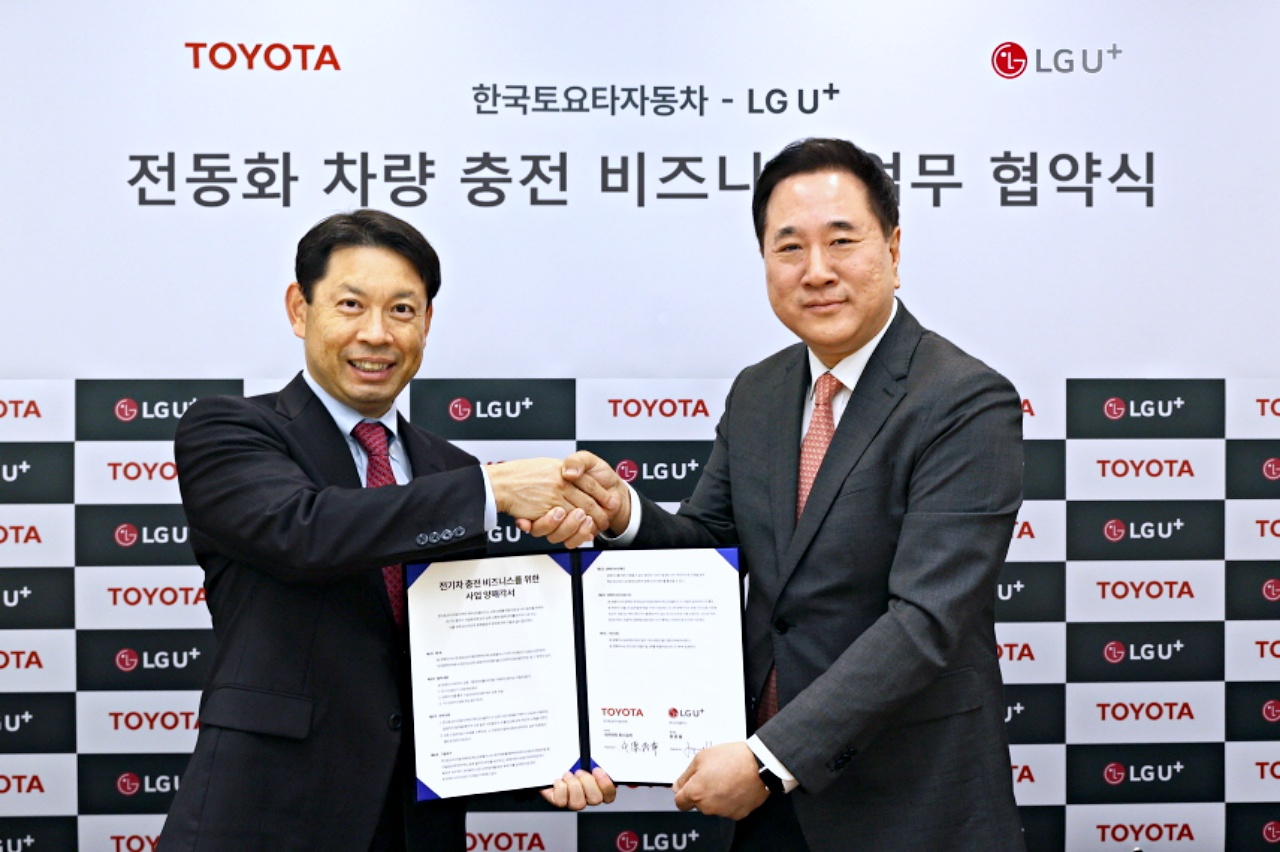
LG Uplus Corp. announced on Monday, Dec. 11, that it has joined forces with Toyota Motor Korea to set up more electric vehicle (EV) charging infrastructures in South Korea. The tie-up will introduce a membership service that will link the purchase of new Toyota vehicle units to the mobile network operator’s EV charging service called “Voltup.”
As per The Korea Economic Daily, the service will be offered to customers buying Toyota’s fifth-generation Prius Plug-in Hybrid, which is set to debut in Korea this month. All members will enjoy the complimentary perk of free charging at the stations for the first month, and this service is said to be worth KRW50,000 or $37.90.
Toyota Membership Card
Fifth-generation Prius Plug-in Hybrid owners can use their Toyota membership card to claim the free charging offer for their electric vehicles. This scheme is reportedly an extension of the previous collaboration between the companies signed in June 2022.
Their first collaboration of LG Uplus and Toyota was related to the infotainment service platform called the U+Drive. At any rate, the new agreement was signed through a ceremony held at Toyota Motor Korea’s headquarters. Key executives - Hyun Jun Yong of LG Uplus EV charging unit and Toyota’s executive director Toshiyuki Nakahara were present at the event.
Installation Plans for Charging Stations
The Korean unit of Toyota Motor said it plans to install electric vehicle charging stations at the company’s official dealer showrooms and service centers nationwide. Starting from this installation, the automaker will continue to expand its infrastructure.
Toyota and LG Uplus will also extend their partnership to other business areas, such as improving driver benefits to attract more electric vehicle customers and increase the number of EV charging users.
“This business agreement, which was concluded to coincide with the launch of the 5th generation Prius model, is significant in that it is a collaboration to expand the electric vehicle charging infrastructure with global automakers,” LG Uplus’ vice president and head of EV charging business, Hyun Jun Yong, said in a press release. “We will continue to cooperate by expanding automobile and electric vehicle charging infrastructure as well as developing customized benefits for each customer.”
Toyota Motor Korea’s executive director, Toshiyuki Nakahara, also commented, “Toyota is emphasizing carbon neutrality through electrification as a necessity, not an option, by providing a variety of options such as plug-in hybrid (PHEV) and electric vehicles (BEV) as well as hybrid (HEV). We are continuously making efforts to meet the needs of our customers and through this business agreement, we will not only launch an electric model but also cooperate to increase customer convenience by expanding infrastructure.”
Photo by: LG Korea Media Room







