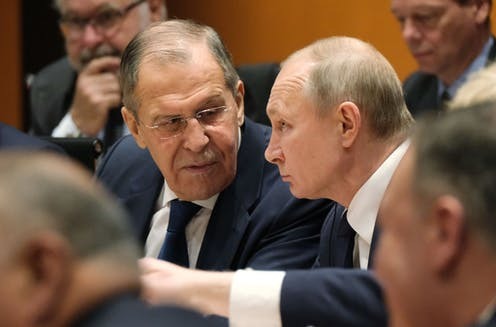
Russian Foreign Minister Sergei Lavrov said on Monday that Moscow intends to reduce its defense spending, while warning that NATO’s rising military budgets could ultimately lead to the alliance’s downfall. Lavrov's comments followed a decision by NATO leaders to significantly increase defense spending in response to what they describe as growing threats from Russia.
The spending hike was pushed by U.S. President Donald Trump and endorsed during the recent NATO summit. NATO members reaffirmed their collective defense commitments and warned against potential Russian aggression. Moscow, however, continues to deny claims it poses a threat to NATO countries.
Responding to Polish Foreign Minister Radoslaw Sikorski's remarks that an arms race could trigger President Vladimir Putin’s fall, Lavrov turned the prediction around. “If he’s such a forecaster, he may also see that a massive increase in NATO budgets will bring about the collapse of the alliance,” Lavrov stated.
Russia, which launched a full-scale invasion of Ukraine in 2022 after years of conflict in the Donbas region, claims its actions are defensive. Both Washington and Moscow have acknowledged that a direct conflict between Russia and NATO could escalate into a global war.
On Friday, President Putin said Russia would begin cutting military spending starting next year. In 2025, Moscow allocated 6.3% of its GDP to national defense—the highest level since the Cold War—making up 32% of the federal budget. This marks a 25% increase in defense spending compared to the previous year.
Lavrov’s warning underscores growing geopolitical tensions as NATO arms up and Russia recalibrates its military budget, setting the stage for a complex global security landscape.