


 AI Agents Could Disrupt Financial Services, Bernstein Says
  Asian Stocks Mixed as Markets Await U.S. Jobs Data
  Dollar Hits Three-Month High as US Treasury Yields Surge
  G20 Divided Over US Push to Curb Industrial Overcapacity
  Nasdaq Futures Jump as Micron Earnings Boost AI Trade
  Oil Prices Surge as U.S.-Iran Tensions Fuel Supply Fears
  Australia Inflation Accelerates to 4% After RBA Rate Hike
  Fed’s Logan Signals 50 Basis Points More in Rate Hikes


 Add as a preferred source on Google
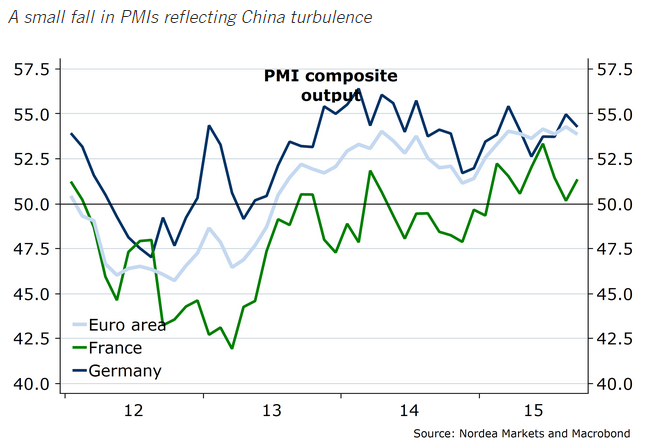
The PMIs fell more than expected in Germany, pulled down particularly by lower manufacturing confidence. Whereas, the levels are still high indicating a growth rate around 0,4 % in the third quarter of 2015, argues Nordea Bank.
Domestic demand appear to keep up the German incoming orders reflecting lower demand from emerging markets and China. This effect could be more than temporary since it is already visible in incoming orders.
The turbulence in China has had a negative effect on Euro area confidence, the effect being most visible in Germany. The manufacturing PMI of Euro zone fell to 52 from 52.3 and the services sector fell to 54 from 54.4, both still indicating solid growth in September, notes Nordea Bank.







