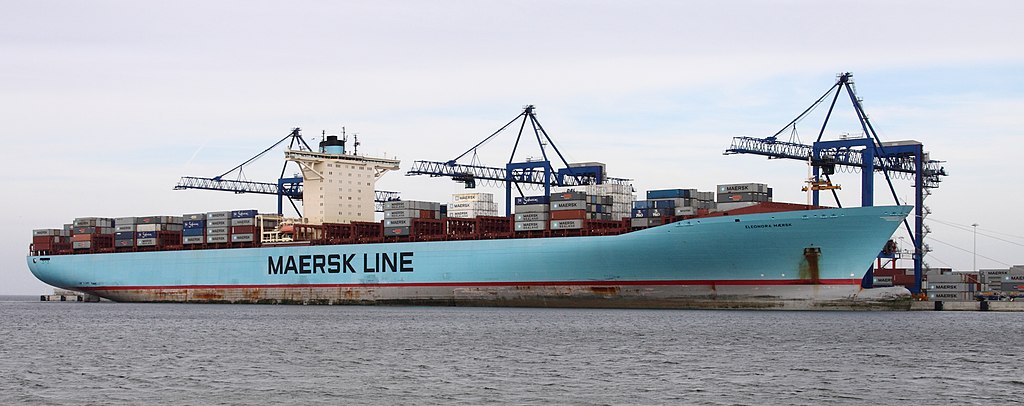
Danish shipping giant Maersk announced on Friday that one of its container vessels has successfully navigated the Red Sea and the Bab el-Mandeb Strait for the first time in nearly two years, marking a cautious milestone for global shipping routes disrupted by regional conflict. Despite the successful transit, Maersk emphasized that it currently has no plans to fully reopen the critical trans-Suez shipping corridor for its broader East-West network.
According to a statement from the company, the vessel Maersk Sebarok completed the journey through the Red Sea on Thursday and Friday. The move comes after Maersk and other major shipping companies began diverting vessels away from the Red Sea and Gulf of Aden in January 2024. These diversions routed ships around the Cape of Good Hope, significantly increasing transit times and costs, following repeated attacks on commercial shipping by Yemen’s Houthi militants. The attacks were carried out in what the group described as solidarity with Palestinians amid the ongoing Gaza conflict.
Maersk described the latest voyage as a “significant step forward” but stressed that the security situation in the region remains unstable. The company stated that the successful passage should not be interpreted as a signal that normal shipping operations through the Red Sea and Suez Canal will resume in the near future. Instead, Maersk said it is evaluating a “stepwise approach” toward potentially resuming transits, depending on evolving security assessments and risk conditions.
At present, Maersk confirmed that there are no additional Red Sea sailings planned. The company continues to prioritize crew safety and cargo security, key considerations that have shaped its operational decisions over the past year. The Red Sea is one of the world’s most important maritime trade routes, connecting Europe and Asia, and disruptions have had a wide-ranging impact on global supply chains, freight rates, and delivery timelines.
While the successful transit offers cautious optimism for the shipping industry, Maersk’s stance underscores that a full return to the Red Sea route remains unlikely until long-term stability and safety can be assured.