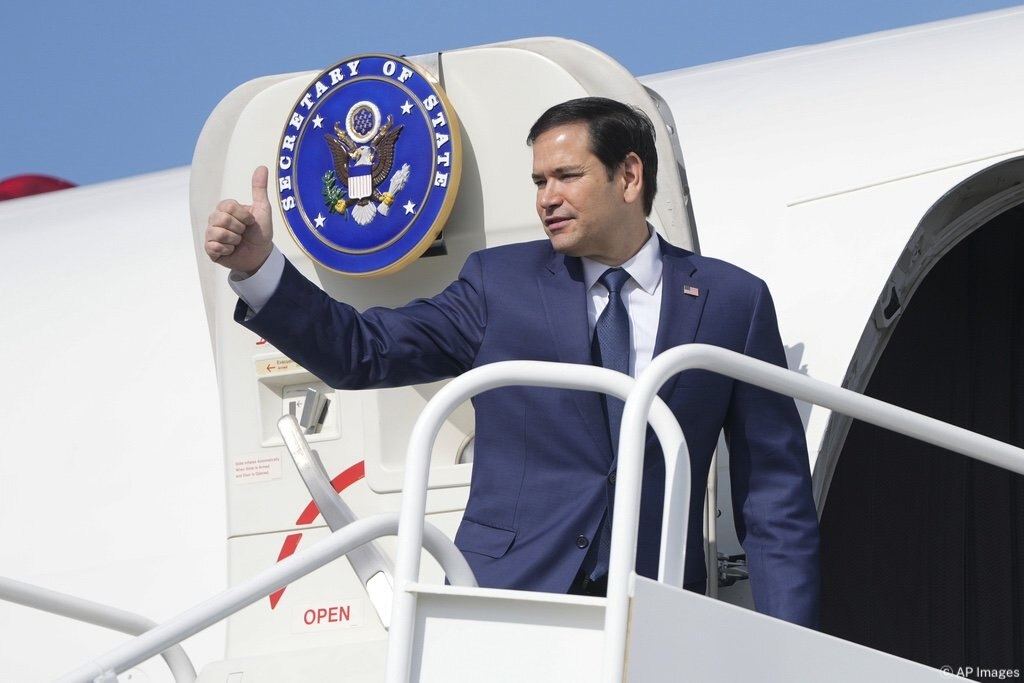
U.S. Secretary of State Marco Rubio announced plans to visit the five Central Asian nations—Kazakhstan, Kyrgyzstan, Tajikistan, Turkmenistan, and Uzbekistan—next year, underscoring Washington’s renewed focus on the resource-rich region. Speaking at a State Department reception, Rubio emphasized that the United States and Central Asian states share common interests in developing natural resources responsibly to boost economic diversification.
“You are looking to take the resources that God has blessed your nations with and turn them into responsible development,” Rubio said, adding that he intends to visit all five countries during a week-long trip.
The announcement came ahead of a high-profile meeting between U.S. President Donald Trump and the presidents of the five Central Asian countries in Washington. The talks are expected to focus on strengthening economic ties, particularly in the areas of rare earth minerals and energy development—key sectors in which these nations have significant untapped potential.
Deputy Secretary of State Christopher Landau highlighted that the Trump administration’s initiative reflects a strategic push to engage more actively with Central Asia, a region traditionally influenced by Russia and China. Landau, along with Sergio Gor, the U.S. ambassador to India and Trump’s special envoy to Central Asia, recently visited Kazakhstan and Uzbekistan to finalize agreements to be announced during the leaders’ visit.
“The opportunities are amazing—business opportunities, many ways to partner there,” Landau noted.
In addition, Senator James Risch announced plans to introduce a bill aimed at repealing the Cold War-era Jackson–Vanik amendment, which restricts U.S. trade with non-market economies. The proposed repeal is seen as part of Washington’s broader effort to deepen trade and investment ties with Central Asia while countering regional dependence on Moscow and Beijing.