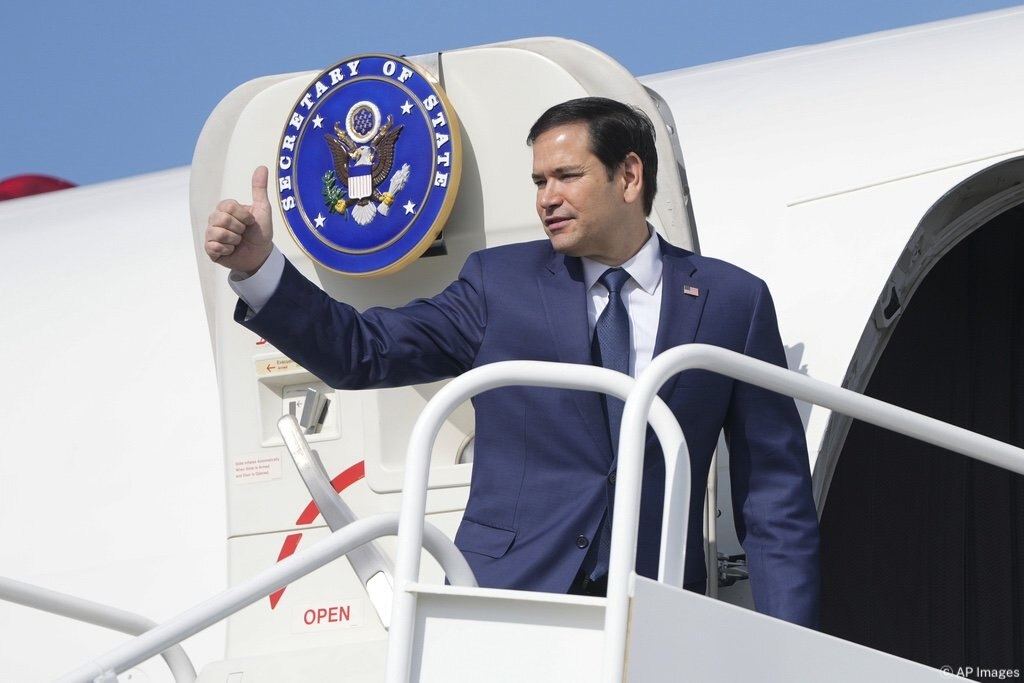
U.S. Secretary of State Marco Rubio is set to travel to Canada’s Niagara region this week to attend the Group of Seven (G7) foreign ministers’ meeting, his office confirmed. The two-day summit, scheduled for Tuesday and Wednesday in Niagara, Ontario, will bring together foreign ministers from the United States, France, Germany, Italy, Japan, and Britain to address pressing global security and economic challenges.
According to Rubio’s office, the discussions will focus on U.S. President Donald Trump’s diplomatic efforts to promote peace in Ukraine and Gaza, along with strategies to enhance security in Haiti and Sudan. The ministers will also explore ways to strengthen maritime security, critical minerals cooperation, and global supply chains — key areas of concern amid growing geopolitical tensions.
The meeting follows a challenging G7 leaders’ summit in June, where the member countries struggled to agree on a unified strategy toward Russia’s invasion of Ukraine. That summit was also attended by Ukrainian President Volodymyr Zelenskiy, who continues to urge the United States for increased military support. Trump, however, has publicly encouraged Zelenskiy to consider territorial concessions to Russia in pursuit of ending the ongoing conflict.
In addition to the core G7 members, foreign ministers from Australia, Brazil, India, Saudi Arabia, Mexico, South Korea, South Africa, and Ukraine have been invited by Canada’s foreign ministry to participate in this week’s discussions. Their inclusion underscores a broader international effort to address shared challenges, including global stability and economic resilience.
The upcoming G7 foreign ministers’ meeting in Canada is expected to be pivotal, shaping the direction of Western diplomacy on some of the world’s most pressing crises — from war zones in Eastern Europe and the Middle East to supply chain vulnerabilities affecting economies worldwide.