


 Jordan Bardella Antisemitism Allegations Threaten Le Pen’s Campaign
  Solidigm Taps Goldman, Morgan Stanley for $10 Billion US IPO
  India Voter List Protests Reach Supreme Court as Opposition Demands Election Chief's Resignation
  Amazon Cuts More Jobs as AI Investment Expands
  Pakistan Declares Emergency in Khyber Pakhtunkhwa, Suspends Imran Khan’s PTI Government
  Moonshot AI Executives Seek Settlement Ahead of Hong Kong IPO
  Bumble Shares Surge 50% on $1 Billion Buyout Talks
  FAA Warns US Airlines Over Saudi Arabia Flight Risks
  Panama Declares Emergency After 7.7 Earthquake Triggers 200 Aftershocks
  Russian Strikes Kill Six in Ukraine, Including Three in Kharkiv
  US Condemns China Sanctions on Taiwan Allies Belize and Paraguay
  TSMC Profit Set to Surge 65% as AI Chip Demand Drives Record Earnings
  Trump Sanctions International Criminal Court, Sparking EU Backlash
  Ethereum Foundation-Linked Wallets Move $11.13M in ETH to Kraken
  Djibouti Migrant Boat Capsizes, Killing 139 and Leaving 84 Missing
  Orsted to Take Full Ownership of UK Offshore Wind Farm for £15 Million
  Epic Games Delays Disney Shooter, Shifts to AI-First Development


 Add as a preferred source on Google
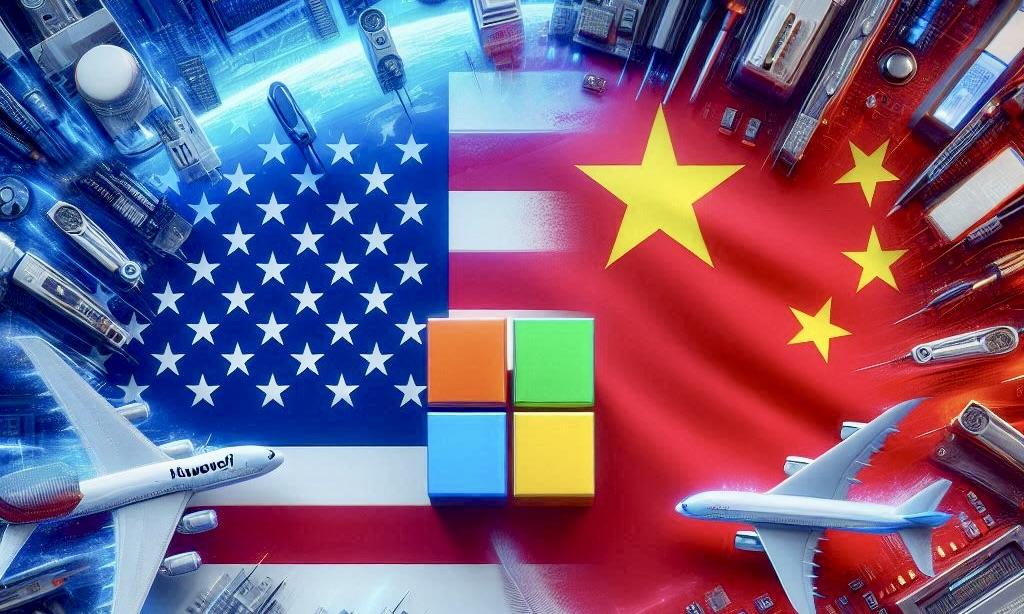
The White House praised Microsoft's $1.5 billion investment in G42, emphasizing the positive impact of ending relations with Huawei on AI security.
White House Sees Positive Shift in UAE Tech Alliances
According to Reuters, a White House source stated on Monday that the $1.5 billion investment by Microsoft in G42, an AI business based in the United Arab Emirates, was "generally a positive development" since it compelled the corporation to cut relations with Huawei, a Chinese tech giant.
According to White House tech advisor Tarun Chhabra, "we have an interest in changing that picture" in countries like the UAE, where G42 and Huawei were tightly affiliated.
"The effort to work with Microsoft as an alternative to Huawei is generally a positive development and one that we want to encourage," Chhabra said at a Washington, D.C. event organized by the Council on Foreign Relations.
Huawei's Eavesdropping Concerns Prompt U.S. Action
Concerned that the Chinese telecom equipment firm Huawei would eavesdrop on its clients and transmit the information to Beijing, Washington has sought to persuade its allies to remove Huawei from their networks for a long time.
The United States and China are engaged in a fierce struggle to dominate artificial intelligence, and as the competition intensifies, the Middle East has also begun to play a more significant role in the technology war between the two countries.
G42 and Microsoft Assure Cloud Security in New Deal
Both organizations assured the governments of the United States and the United Arab Emirates that their respective cloud services would be secure, and G42 agreed to use Microsoft in April as part of the agreement to host its artificial intelligence applications.
The New York Times (via Yahoo Finance) said that the Emirati company agreed to remove Huawei and other Chinese hardware from its operations as part of the deal, which included a number of safeguards for the AI products provided with G42.
Concerning the possibility of export limitations on AI software, Chhabra stated that the Biden administration was keeping a close eye on its implementation.
"We are keeping a close eye on the latest models as they are released, whether they are open sourced, whether they are proprietary," according to him. "We want to know what are their capabilities."
The export of proprietary or closed source AI models—those whose software and the data used to train it are kept secret—was reportedly being considered by the Commerce Department in a May Reuters story.
Countries identified as potential smuggling routes for powerful AI chips developed in the United States are already subject to stringent shipping restrictions.
Photo: Microsoft Bing







