


 Epic Games Delays Disney Shooter, Shifts to AI-First Development
  Robinhood Chain Eyes Priority Gas Auctions for Faster Trades
  TSMC Profit Set to Surge 65% as AI Chip Demand Drives Record Earnings
  Meta Launches Muse Wonder AI Models, Shares Rise 3.7%
  Apple Names Steve Smith M&A Chief in Leadership Shakeup
  Samsung, SK Hynix Shares Fall as China's CXMT Advances DRAM Technology
  Elon Musk Eyes Semiconductor Manufacturing Expansion With $15 Billion Terrafab Project
  Oracle Uses Trucked Natural Gas to Power AI Data Centers Amid Pipeline Delays
  TSMC Q3 Revenue Beats Estimates as AI Chip Demand Surges
  Arthur Hayes Announces FLOP Testnet Launch Within Weeks
  Yandex Data Center Hit by Drone Strike as Russia-Ukraine Cyber Infrastructure Attacks Escalate
  Moonshot AI Executives Seek Settlement Ahead of Hong Kong IPO
  OpenAI Revenue Hits $50 Billion, Below Earlier $70 Billion Estimate
  Tencent Shares Fall as $5 Billion AI Bond Sale Weighed
  Samsung, SK Hynix Shares Plunge as China Chip Competition Grows
  US Suspends Microsoft, Adobe From Green Card Program
  OpenAI Annualized Revenue Hits $50 Billion, Below Earlier Estimates


 Add as a preferred source on Google
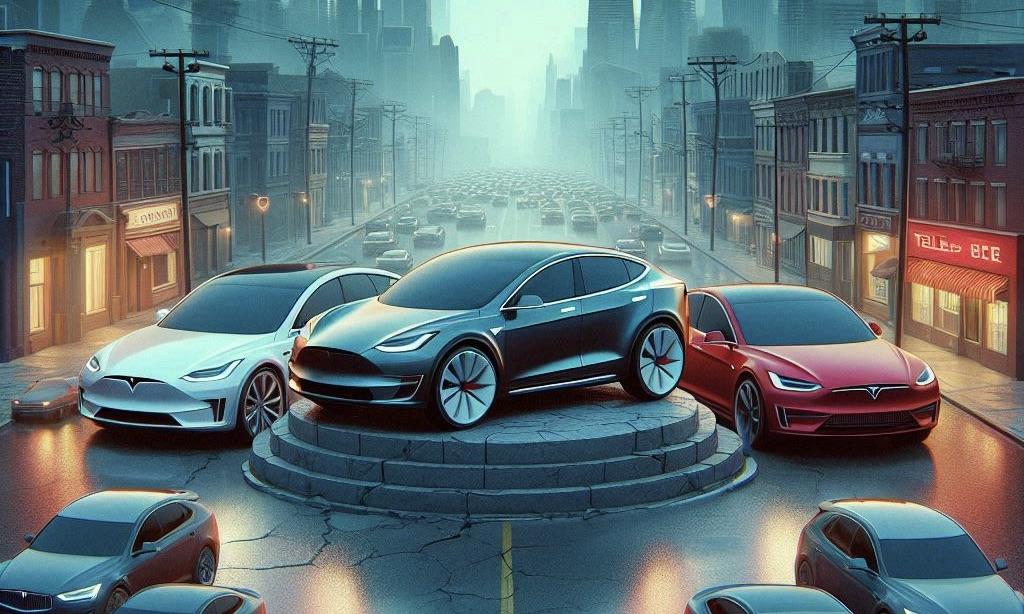
Tesla, Rivian, and Polestar underperformed in J.D. Power's 2024 Initial Quality Study, with Polestar ranking lowest. The study highlighted increased repair needs for EVs compared to gas-powered vehicles.
J.D. Power: EVs Face Higher Repair Rates as Traditional OEMs Improve Quality, Says Report
According to J.D. Power's report (via Teslarati), "problems plagued" battery electric vehicles as traditional OEMs normalized the playing field.
Frank Hanley, Senior Director of Auto Benchmarking at J.D. Power, stated:
“It is not surprising that introducing new technology has challenged manufacturers to maintain vehicle quality. “However, the industry can take solace in the fact that some problem areas such as voice recognition and parking cameras are seen as less problematic now than they were a year ago.”
The J.D. Power study emphasized the assertions that owners and manufacturers frequently make of EVs, which suggest that the reduced number of proponents for these vehicles makes them less problematic and less likely to require repairs.
Nevertheless, this year's study incorporated new repair data, indicating that BEVs and PHEVs require more repairs than gas-powered vehicles in all categories.
Hanley added the following:
“Owners of cutting edge, tech-filled BEVs and PHEVs are experiencing problems that are of a severity level high enough for them to take their new vehicle into the dealership at a rate three times higher than that of gas-powered vehicle owners.”
Ram Tops J.D. Power Quality Study as Tesla, Rivian, and Polestar Struggle with High Defect Rates
Ram was the most successful brand in this year's study, with an initial quality rating of 149 defects per 100 vehicles, as determined by J.D. Power. Chevrolet (160), Hyundai (162), and Kia (163) secured the second, third, and fourth positions, accordingly.
The study's average was 195 issues per 100 vehicles.
This leads us to the performances of Tesla, Polestar, and Rivian. Rivian and Tesla had 266 issues per 100 vehicles, tied for the third-worst rate, following Polestar (316) and Dodge (301).
The three brands were listed below the actual study results due to J.D. Power's assertion that they are "not rank eligible because it does not meet study award criteria."
This is what J.D. Power had to say about BEVs, specifically Tesla:
“Gas- and diesel-powered vehicles average 180 PP100 this year, while BEVs are 86 points higher at 266 PP100. While there are no notable improvements in BEV quality this year, the gap between Tesla’s BEV quality and that of traditional OEMs’ BEV quality has closed, with both at 266 PP100. In the past, Tesla has performed better, but that is not the case this year, and the removal of traditional feature controls, such as turn signals and wiper stalks, has not been well received by Tesla customers.”
In the past, Tesla has demonstrated strong performance in J.D. Power studies, particularly those focusing on in-vehicle technology and EV ownership experiences.
Photo: Microsoft Bing







