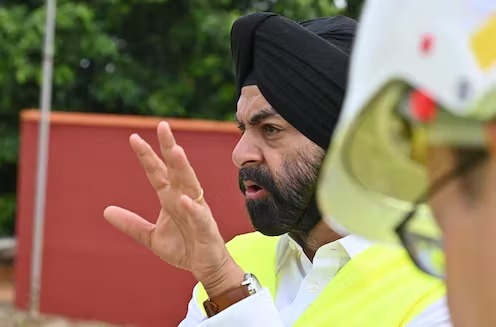
The ongoing Middle East war is sending shockwaves through the global economy, and even a fragile ceasefire brokered by U.S. President Donald Trump may not be enough to prevent lasting damage, World Bank President Ajay Banga warned in a recent interview.
Banga cautioned that global growth could decline by 0.3 to 0.4 percentage points under an optimistic scenario where the conflict ends quickly — and by as much as a full percentage point if fighting continues. Inflation risks are equally alarming, with projections rising by 200 to 300 basis points in the near term, potentially surging to nearly a full percentage point higher in a prolonged conflict scenario.
The World Bank now forecasts growth in emerging markets and developing economies at just 3.65% for 2026, down from an earlier estimate of 4%, with a worst-case projection of only 2.6%. Inflation in those regions could reach 6.7% if the war escalates further. Oil prices have already climbed 50%, while supplies of gas, fertilizers, helium, and other essential commodities face serious disruptions alongside setbacks in tourism and air travel.
A key concern is whether negotiations can lead to a reopening of the Strait of Hormuz, a critical global energy chokepoint. The announced two-week ceasefire remains fragile, with ongoing strikes between Israel and Iran adding to uncertainty ahead of U.S.-Iran talks.
Developing nations — already burdened by high debt and elevated interest rates — are especially vulnerable. The World Bank is actively working with affected countries to access crisis response funds, while also advising against costly energy subsidies that could worsen long-term fiscal health.
The crisis underscores an urgent need for energy diversification. The World Bank is encouraging investment in nuclear, hydropower, geothermal, wind, and solar energy. Nigeria's Dangote Group refinery investment and Mozambique's expanding energy infrastructure have been highlighted as strong models for achieving regional energy self-sufficiency.