


 S&P 500 Relies on Tech for Growth in Q4 2024, Says Barclays
  U.S. Stocks vs. Bonds: Are Diverging Valuations Signaling a Shift?
  Gold Prices Slide as Rate Cut Prospects Diminish; Copper Gains on China Stimulus Hopes
  China's Refining Industry Faces Major Shakeup Amid Challenges
  Moody's Upgrades Argentina's Credit Rating Amid Economic Reforms
  UBS Projects Mixed Market Outlook for 2025 Amid Trump Policy Uncertainty
  Trump’s "Shock and Awe" Agenda: Executive Orders from Day One
  Global Markets React to Strong U.S. Jobs Data and Rising Yields
  European Stocks Rally on Chinese Growth and Mining Merger Speculation
  Mexico's Undervalued Equity Market Offers Long-Term Investment Potential
  Geopolitical Shocks That Could Reshape Financial Markets in 2025
  China’s Growth Faces Structural Challenges Amid Doubts Over Data
  U.S. Banks Report Strong Q4 Profits Amid Investment Banking Surge
  Fed May Resume Rate Hikes: BofA Analysts Outline Key Scenarios
  Indonesia Surprises Markets with Interest Rate Cut Amid Currency Pressure
  Gold Prices Fall Amid Rate Jitters; Copper Steady as China Stimulus Eyed
  US Gas Market Poised for Supercycle: Bernstein Analysts


 Add as a preferred source on Google
Moody's Investors Service says that the financial metrics of Moody's-rated Chinese property developers in the first half of 2015 (1H 2015) were largely stable -- and in line with Moody's expectations -- when compared with the developers' financial metrics at year-end 2014.
Looking ahead, Moody's expects these developers to show moderate revenue growth of around 10%-15% and stable financial metrics for full year 2015.
"Rated developers adopted a more cautious approach to business expansion during 1H 2015. Such an approach slowed their debt growth to a level in line with the growth in contracted sales and revenue," says Kaven Tsang, a Moody's Vice President and Senior Credit Officer.
"Against this backdrop, the developers' financial metrics showed some signs of stabilization in 1H 2015," adds Tsang.
This situation contrasts with that in 2014, when the developers' financial performance deteriorated, through more aggressive debt-funded business expansions.
Moody's analysis is contained in its just-released report titled "Property Developers -- China: 1H Results Show Signs of Stabilization Amid China's Economic Slowdown," and is authored by Tsang.
Moody's report also highlights that credit metrics diverged moderately among different developers and rating categories.
Baa-rated developers -- such as China Vanke Co., Ltd. (Baa1 stable), Poly Real Estate Group Co. Ltd (Baa2 stable), and Dalian Wanda Commercial Properties Co., Ltd. (Baa2 stable) -- saw their debt leverage improve mildly in 1H 2015.
But Ba and B-rated developers continued to see modest declines in their margins and EBIT/interest coverage in 1H 2015.
In particular, developers with material exposure to low-tier cities, and which have been shifting their focus to major cities or cities in which they demonstrate a stronger presence saw sharp margin declines, as they cleared inventories.
A total of eight property developers saw their credit quality worsen in 1H 2015. The decline stemmed mainly from low revenue recognition, higher debt leverage, and/or significant declines in profit margins and interest coverage.
Moody's points out that of the eight, only Jingrui Holdings Limited was downgraded to B3 negative from B2 negative. As for the other seven, their ratings were unchanged because Moody's either expects their credit quality to improve in 2H 2015, or assessed that their ratings and outlooks were appropriate for the credit quality that they demonstrated in 1H 2015.
On the issue of liquidity, Moody's report says the developers' liquidity levels -- as measured by cash to short-term debt -- weakened to 1.7x as of June 2015 from 1.9x as of December 2014, but remains adequate. In addition, offshore refinancing risk remains manageable, given the relatively small amount of offshore bonds maturing through 2015 and in 2016.
Nevertheless, refinancing risk for the maturing offshore bonds of Glorious Property Holdings Limited (Caa3 negative) and Renhe Commercial Holdings Company Limited (Caa1 negative) remains high and is reflected in their low ratings.
While a slowdown in China's economy will weaken the purchasing power of consumers, Moody's says the impact on the property market should be manageable, because the Chinese government's (Aa3 stable) easing of monetary policy to support the domestic economy should in turn support property sales. Such an assessment is evidenced by the 18.7% year-on-year growth in nationwide sales in the first eight months of 2015. Moody's rates a total of 49 Chinese property developers.

- News

- Economy

- Central Banks
- Investing
- Research
- Roundups
- Digital Currency
- Insights
- Technical Analysis
- Technology
- Business
- Law
- Health
- Nature
- Fintech
- Science
- Topic
- Opinions
- ©Econometrics LLC . All Rights Reserved.
Moody's: Chinese property developers' 1H 2015 results show signs of stabilization and will remain stable
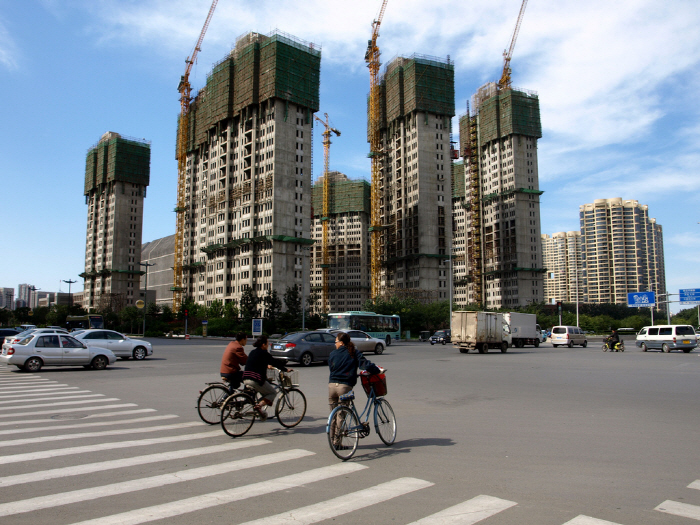
Tianjin rising (Hugi Olafsson_Flikr)
Friday, September 18, 2015 1:55 AM UTC
Editor's Picks



- Market Data
Most Popular




