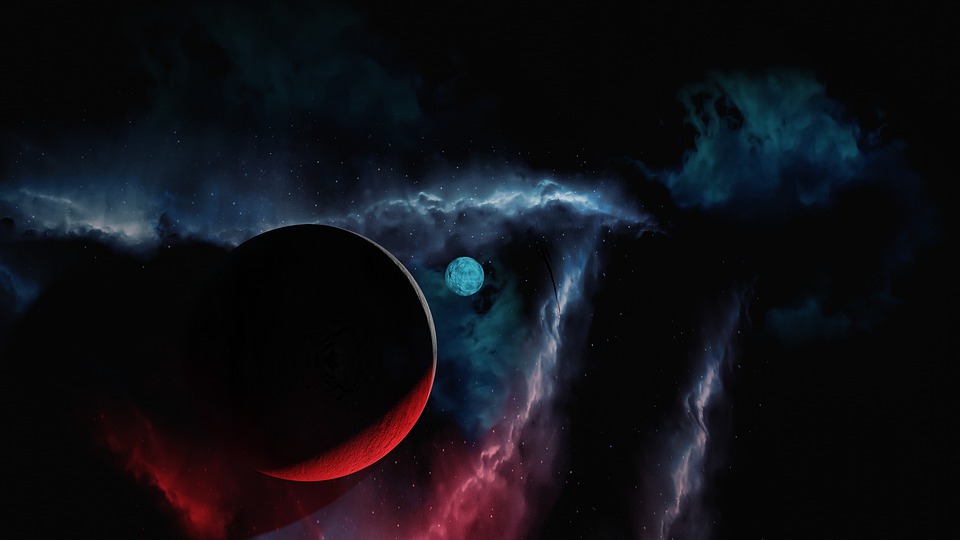
Space exploration has already come a long way, from discovering stars and galaxies to even other planets in the universe that are outside our own Solar System. As NASA is also in on the search for alien life as well as exoplanets that would have the same conditions as our own planet Earth, the agency released the concept art of one particular Earth-like exoplanet called Proxima B.
Express reports NASA has released a mock up of an Earth-like exoplanet known as Proxima B. Scientists believe that Proxima B is potentially habitable, meaning it has the conditions and the composition to be able to host life. Proxima B also orbits around a red dwarf star from a distance that liquid water could be found on its surface. Water is one of the fundamental components for life, and finding liquid water can indicate how habitable a planet could be.
“Why is liquid water so important? Life on Earth started in water, and water is a necessary ingredient for life (as we know it). Imagine if Earth was where Pluto is. The Sun would be barely visible (about the size of a pea) and Earth’s ocean and much of its atmosphere would freeze,” said NASA.
However, on the other end of the spectrum, Mercury, the planet closest to the Sun, is too hot to be able to hold liquid water. While Proxima B does not have these problems, it does not immediately indicate that there may be life existing or thriving on the exoplanet. According to the concept art, Proxima B is depicted as barren and rocky, with its star, Proxima Centauri, seen on the horizon.
Meanwhile, a new theory suggests that a goldilocks zone, or a zone that is deemed habitable, may exist close to supermassive black holes, which could potentially be a breakthrough in discovering another Earth-like exoplanet. This theory was presented by National Astronomical Observatory for Japan’s Keiichi Wada.
Wada explained that the formation between the black hole and the potentially habitable exoplanets do not interact because they are very different from each other. Professor Wada and his team estimated that with a distance of 10 light-years away from each other, the gravitational environment is stable enough for planets to form.