


 Tabletop particle accelerator could transform medicine and materials science
  Trump and Merck KGaA Partner to Slash IVF Drug Costs and Expand Fertility Coverage
  NASA and Roscosmos Chiefs Meet in Florida to Discuss Moon and ISS Cooperation
  SpaceX Prioritizes Moon Mission Before Mars as Starship Development Accelerates
  SpaceX Pivots Toward Moon City as Musk Reframes Long-Term Space Vision
  Neuralink Plans High-Volume Brain Implant Production and Fully Automated Surgery by 2026
  China vs. NASA: The New Moon Race and What's at Stake by 2030
  FDA Pilot Program Eases Rules for Nicotine Pouch Makers
  Blue Origin New Glenn Rocket Explodes During Launch Pad Test, Delaying Space Ambitions
  SpaceX’s Starship Completes 11th Test Flight, Paving Way for Moon and Mars Missions


 Add as a preferred source on Google
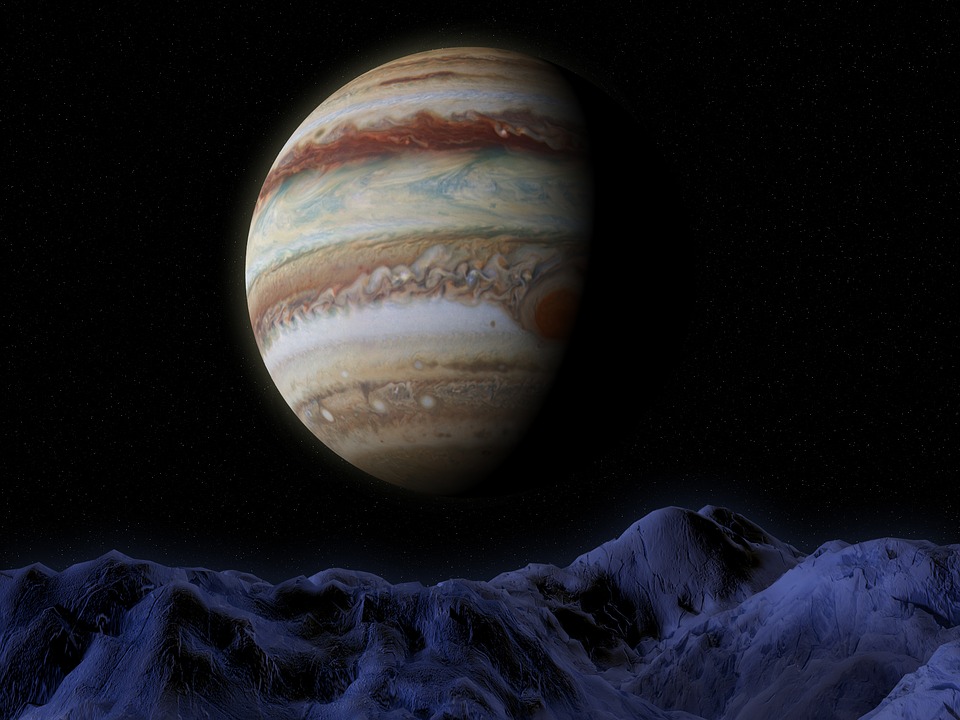
Among the many moons found in the Solar System, the biggest would be Jupiter’s Moon Ganymede, and because of its size, any other parts remain a mystery to astronomers. Recently, NASA released a shot of the northern polar region of Ganymede taken by the agency’s Juno spacecraft.
Express reports NASA’s Juno spacecraft was able to take photos of Ganymede’s northern polar region in December of 2019. According to the agency, Ganymede is the ninth biggest object in the Solar System, next to Earth, Venus, and the red planet Mars. Ganymede also happens to be the only Moon that is bigger in size than Mercury, the planet closest to the Sun.
Although Ganymede appears to be mostly made up of water ice, it is also the only Moon that has a magnetic field. Compared to Earth, any solar particles that would strike the atmosphere and the magnetic field would produce auroras. But because Ganymede has no atmosphere, the solar particles that bounce off of Jupiter simply hit its Moon. It was because of this that the plasma that constantly hits Ganymede has an effect on its ice.
According to Rome’s National Institute for Astrophysics JUNO co-investigator Alessandro Mura, “The JIRAM data show the ice at and surrounding Ganymede’s north pole has been modified by the precipitation of plasma. It is a phenomenon that we have been able to learn about for the first time with Juno because we are able to see the north pole in its entirety.”
In other news, astronomers have detected the presence of “alien” asteroids within the solar system. The astronomers from the Sao Paolo State University Institute of Geosciences and Exact Sciences were able to spot 19 of these so-called alien asteroids. These types of space rocks are referred to as Centaurs, and they were found orbiting between Jupiter and Neptune.
According to the study’s co-author Professor Maria Helena Moreira Morais, some of the celestial objects that are now found in the solar system must have come from other stars. This is because, as the solar system was built 4.5 billion years ago, the stars found within the system were a lot closer to each other, and may have exchanged material among the star systems.







