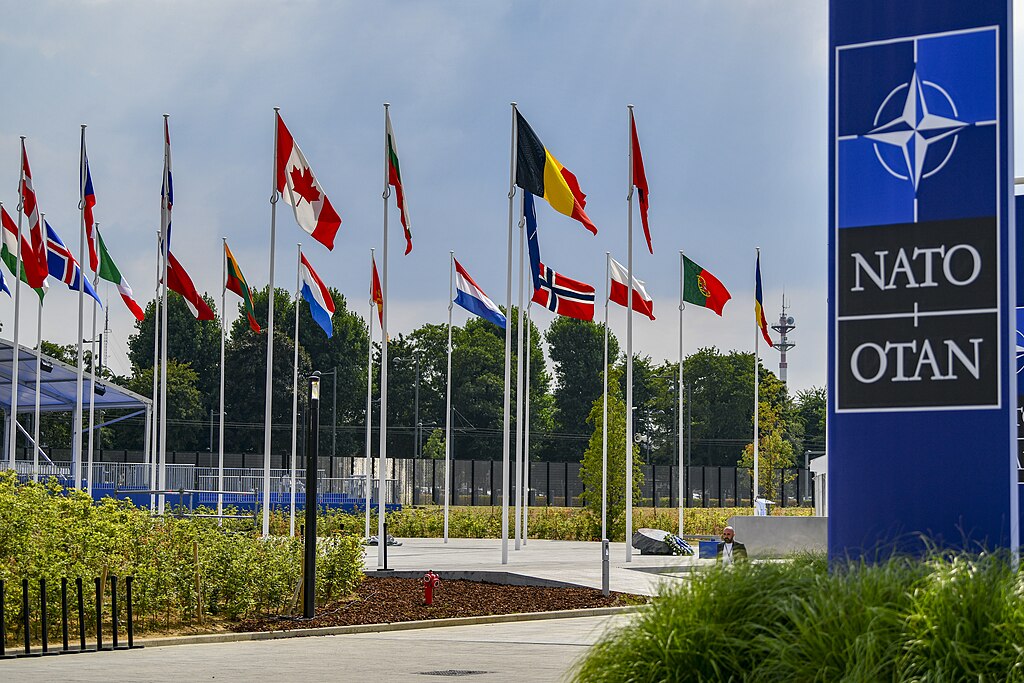
NATO’s top military commander convened a videoconference this week to help interested allies coordinate potential contributions aimed at protecting freedom of navigation in the Strait of Hormuz, while stressing that the effort is not an official NATO mission.
Supreme Headquarters Allied Powers Europe (SHAPE) hosted the meeting on Wednesday, August 19, bringing together interested NATO members at the chief of defence level, according to a spokesperson for U.S. Air Force General Alexus Grynkewich, NATO’s Supreme Allied Commander Europe.
The talks were designed to facilitate possible national contributions to efforts supporting safe maritime passage through the strategically important waterway.
The spokesperson emphasized that NATO itself is not launching an operation in the Strait of Hormuz. Instead, the alliance is using its ability to coordinate members and assess the military capabilities individual countries could provide.
NATO countries have so far sought to avoid becoming directly involved in the Iran conflict. Their attention has instead shifted toward initiatives conducted outside NATO that could help restore secure commercial shipping through the Strait of Hormuz.
The narrow waterway is one of the world’s most important energy transit routes. Before February, roughly one-fifth of globally traded oil passed through the strait, making disruptions there a major concern for international energy markets, shipping companies and governments.
France and Britain have been leading separate efforts to establish a multinational coalition that could guarantee safe passage through the Strait of Hormuz once regional tensions ease or the Iran conflict ends.
Around a dozen countries have been involved in discussions over potential participation in the maritime initiative.
However, establishing a durable security arrangement for the Strait of Hormuz would ultimately depend on cooperation or acceptance from Iran, which borders the critical shipping route. For now, NATO’s involvement remains limited to facilitating discussions among allies considering contributions to future freedom-of-navigation efforts.