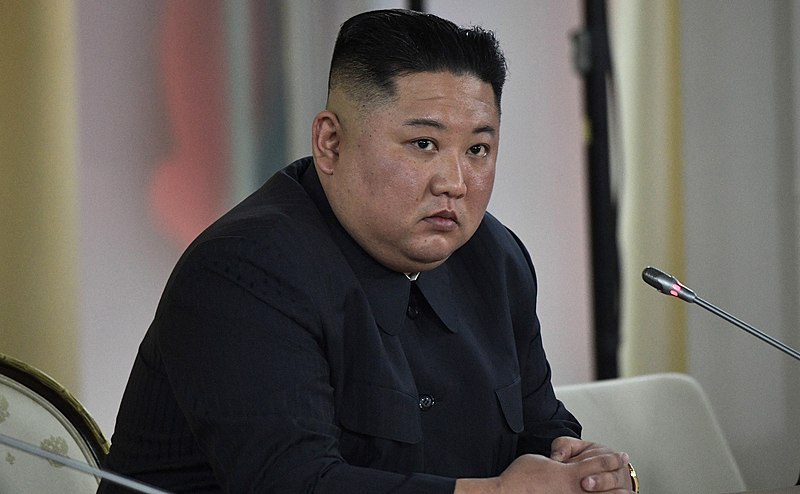
North Korean leader Kim Jong-un has called on the nation’s scientists to expand the production of “weapon-grade nuclear materials” and to build more powerful weapons. The latest calls by Kim follow his previous pledge to ramp up the isolated nation’s nuclear weapons program.
North Korean state media KCNA reported this week that during a briefing, Kim called on the scientists in the nation’s nuclear weapons institute to expand the production of “weapon-grade nuclear materials” and to build more powerful weapons.
Kim added that North Korea should be prepared to use its nuclear weapons “anytime and anywhere.” Kim reiterated his previous pledge to “exponentially” ramp up the production of nuclear weapons ahead of the arrival of a US Navy carrier strike group in South Korea.
“We should never be satisfied with the work to consolidate the thoroughgoing response posture of our nuclear force and should continously strive to strengthen nuclear force steadily,” said Kim, according to KCNA and reported by the South Korean Yonhap news outlet.
Kim said the officials should “expand on a far-sighted way the production of weapon-grade nuclear materials for thoroughly implementing the plan…on increasing nuclear arsenals exponentially,” according to KCNA, adding that officials must “put spurs to continuing to produce powerful nuclear weapons.”
The report by KCNA also said that Kim was briefed on an IT-based integrated nuclear weapon management system called Haekbangashoe, meaning “nuclear trigger.” The report added that the accuracy, reliability, and security of the system were verified during recent drills that simulated a nuclear counterattack.
North Korean media also published photos of Kim inspecting what looked like tactical nuclear warheads referred to as Hwasan-31.
On Tuesday, White House National Security spokesperson John Kirby told reporters that there has not been a willingness from Pyongyang to accept Washington’s offer to hold talks on its nuclear weapon. However, Kirby said the offer remains on the table should Pyongyang eventually accept.
“To date they have not shown any willingness,” said Kirby.
Pyongyang has largely ignored the offers by the US to return to talks over its nuclear program. North Korea has accused the US and South Korea of hostilities with the allies’ joint drills in the region.