


 Nvidia Pauses AI Cloud Financing Deals Amid Antitrust Concerns
  OpenAI Rejects Apple Trade Secret Theft Claims
  Salesforce Shares Surge as AI Demand Powers Q2 Earnings Beat
  BofA Names ASML Top Semiconductor Equipment Pick on Growth, Valuation
  SK Hynix Shares Fall as Workers Reject Wage Deal
  Google Expands Gemini Enterprise With AI Tools for Legal Sector
  U.S. Probes Apex Logistics Over Nvidia AI Chip Shipments to China
  OpenAI Nears Astra AI Model Launch With Safety Focus
  U.S. Disrupts China-Linked Hacking Campaign Targeting Government Agencies
  Apple’s Phil Schiller Steps Back as Leadership Shake-Up Accelerates
  SpaceX Mobile Network Could Cost Up to $130 Billion, Bernstein Says
  HP Stock Drops 9% Despite Q3 Earnings Beat and Raised 2026 Outlook
  Nvidia Reportedly Eyes $13 Billion Hugging Face Acquisition
  MongoDB Stock Sinks 14% as Atlas Growth Misses Expectations
  Nvidia Revenue Soars 106% as AI Demand Hits ‘Inflection Point’
  Meta Agrees to $18 Billion Settlement, Tightens Teen Social Media Rules


 Add as a preferred source on Google
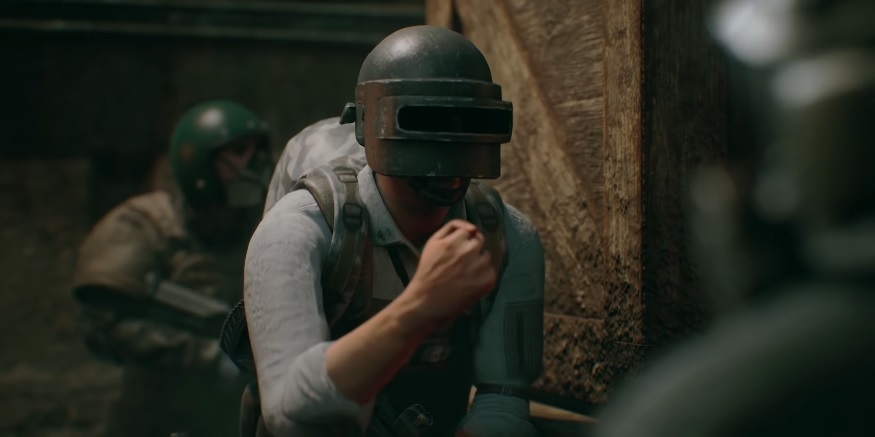
After being in the market for only more than two years, “PUBG Mobile” has proven its reputation of being one of the most popular mobile games. Since launching in 2018, the game has reportedly generated lifetime sales of more than $5 billion.
‘PUBG Mobile’ accumulates $5.1 billion lifetime sales
The pandemic-ridden year of 2020 became a significant period for the video games industry financially, and “PUBG Mobile” was one of the titles that reportedly benefited well from it. Sensor Tower reported that players of the popular battle royale title spent an average of $7.4 million every day last year, helping the game to surge past the $5 billion mark for its lifetime sales.
In 2020, the data and insights firm reported that “PUBG Mobile” had an accumulated sales of $2.7 billion. The first quarter of 2020 saw the biggest sales of $721 million. While the latter part of the year fell a little short, player spending in the fourth quarter still posted a whopping $554 million in sales for the game. However, the numbers have started to pick up for the first quarter of 2021 as the game reportedly saw an estimated player spending of $709 million as of March 29.
China is still the biggest market for the battle royale game
Sensor Tower notes that these numbers include sales from “Game For Peace,” the “PUBG Mobile” localized title in China. And “Game For Peace” reportedly accounts for the larger portion of the mobile franchise’s overall player spending. Of the $5.1 billion lifetime sales, $2.8 billion comes from “Game For Peace” fans, while players from outside China have spent $2.3 billion since the mobile battle royale title was released. Not surprisingly, the game’s market in the United States accounted for the second-largest spending or 12.7% of the overall revenue, followed by Japan with 4.8%.
The data on market share per region is important as it explains how “PUBG Mobile” continues to perform well in terms of player spending despite being banned from India last September, where the game reportedly had 50 million active players. It can be recalled that the Indian government banned 118 apps last year after citing national security concerns.







