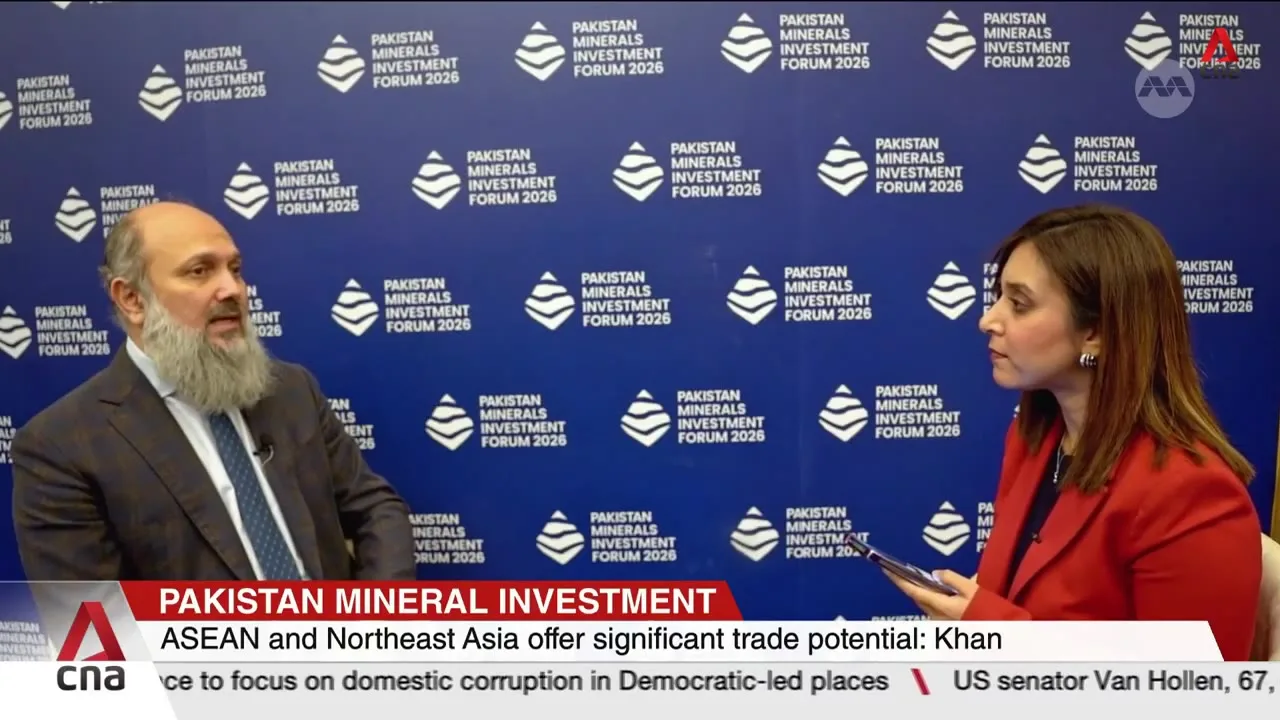
Pakistan has begun pursuing trade agreements with Asian countries, with some finalised and others under negotiation or being drafted, the country’s Commerce Minister Jam Kamal Khan said in an interview.
The effort would extend trade arrangements to countries where Pakistan has no agreement and includes renewed engagement with Japan. Khan spoke in a CNA interview published Nov. 13.
Khan first addressed security, linking Pakistan’s difficulties to conflicts beyond its borders. He cited the effects of the Russian war in Afghanistan, events there after the Sept. 11 attacks and the continuing impact of Afghanistan’s current government.
The Balochistan government, the federal government and law enforcement authorities are building infrastructure in areas where their presence had been limited. Khan expressed hope that the work would bring greater stability “in coming few years”.
Turning to Chinese investment, Khan said Pakistan was now in the second phase of the China-Pakistan Economic Corridor. China already has a presence in the country’s mineral industry and is interested in securing supplies of critical minerals.
Chinese involvement in Pakistan’s mineral sector stretches back 20 years. Khan cited an early copper and gold project and a lead and zinc project that is already producing and exporting.
Interest extends beyond China to chipmakers, other manufacturers and turbine producers seeking future mineral supplies. “It’s not only just the Chinese who have their interest in this subject,” Khan said.
On trade, Khan identified opportunities across East and Southeast Asia, naming South Korea, Japan, China and Vietnam, as well as Bangladesh. He also listed Thailand, the Philippines, Malaysia and Indonesia among countries Pakistan was engaging.
Pakistan has started drafting preferential trade agreements, which give participating countries better terms for trading with each other. Khan did not identify which agreements had been finalised or give dates for completing those still being negotiated.
On energy, Khan described a shift towards renewable sources and away from fossil fuels. Pakistan has been among the world’s biggest solar importers in recent years, he said, without providing import figures.
The textile industry has moved from reliance on grid electricity towards solar power, batteries and wind. Khan described that change as part of a transition already under way, with Pakistan seeking to extend it to other sectors.
The government is also considering how to convert locomotives and is preparing an automotive policy addressing incentives for electric vehicles and their manufacturers. Khan cited Pakistan’s population of 250 million as a source of demand across sectors.
“We’re trying to decrease the dependency on fossil fuel,” Khan said. He gave no timetable for the automotive policy, details of the incentives or target for reducing that dependence.