
Oil price has plummeted more than 50% since mid-2014, amid an oversupply and weak demand due to lack of global growth.
- It has been reiterated that lower oil price will be beneficial for global growth moreover for oil importing economies.
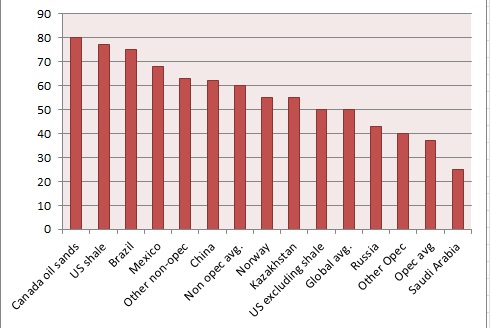
- Nevertheless it is bearing brunt on the oil producers. A chart & a table are included to explain how they fare in terms of production cost.
- Cost of production is highest in Canada, as it produces heavy crude oil from its tar sands.
- Saudi Arabia enjoys the number one position as its average cost is just about $25 a barrel.
- The most pain will be bore by smaller oil producing economies like Nigeria, Algeria which has already been hammered heavily in the value of their stocks, bonds and currencies.
In the back drop of a rising supply and breakdown in cooperation among oil producers, price is expected to remain bearish.
|
Canada oil sands |
80 |
|
US shale |
77 |
|
Brazil |
75 |
|
Mexico |
68 |
|
Other non-opec |
63 |
|
China |
62 |
|
Non opec avg. |
60 |
|
Norway |
55 |
|
Kazakhstan |
55 |
|
US excluding shale |
50 |
|
Global avg. |
50 |
|
Russia |
43 |
|
Other Opec |
40 |
|
Opec avg |
37 |
|
Saudi Arabia |
25 |


