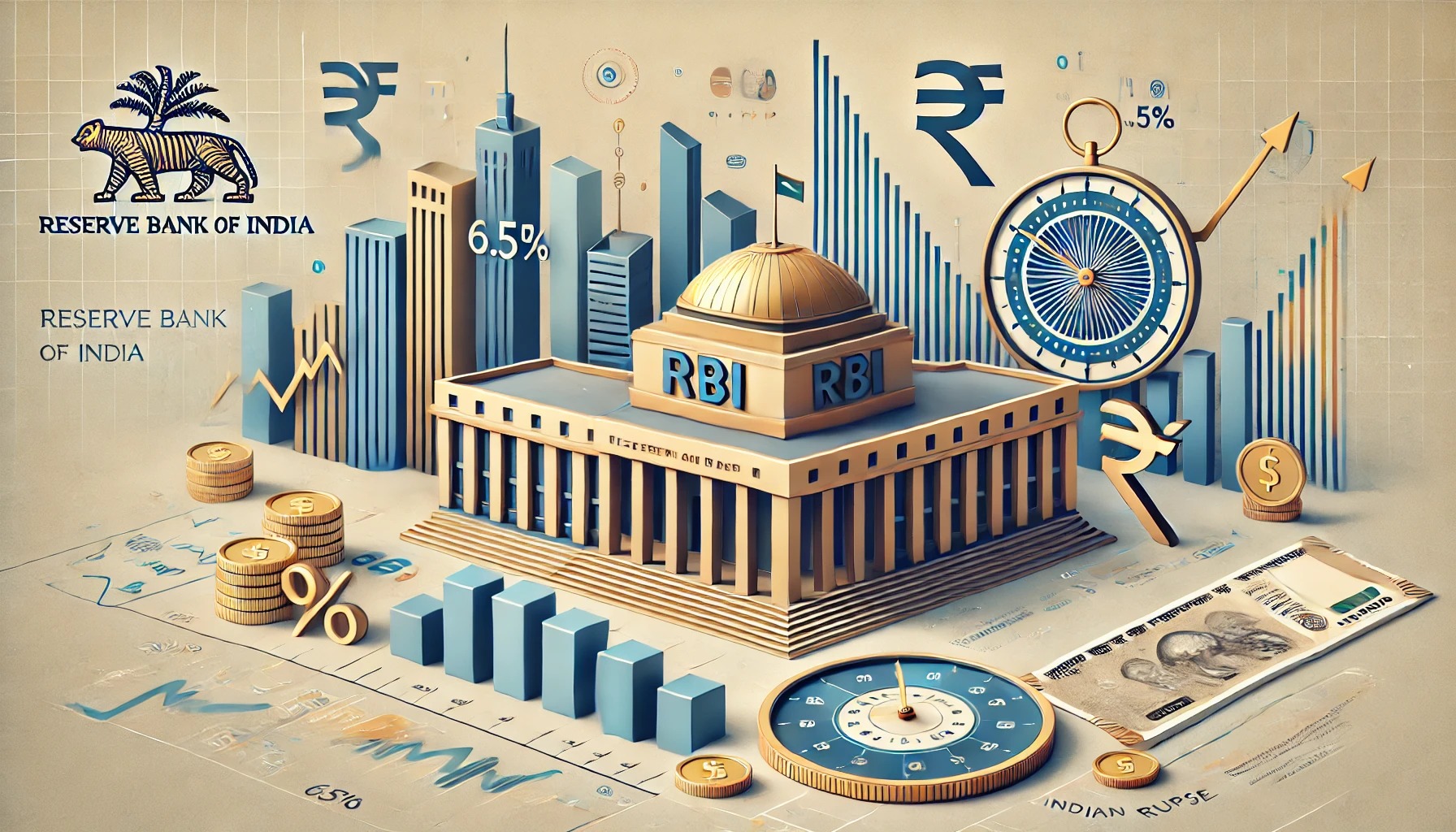
RBI Holds Interest Rates Steady, Signals Potential Rate Cut in Upcoming Months
The Reserve Bank of India (RBI) kept interest rates unchanged at 6.5% during its recent policy meeting, as widely anticipated. However, in a significant shift, the central bank moved to a neutral stance, signaling the possibility of a rate cut in the near future.
RBI Maintains 6.5% Policy Repo Rate
For the tenth consecutive meeting, the RBI held its policy repo rate at 6.5%, with five of the six members of the Monetary Policy Committee voting in favor of this decision. The move was expected, but the shift to a neutral stance opens the door for a potential rate reduction.
RBI's Neutral Stance: A Less Hawkish Approach
RBI Governor Shaktikanta Das highlighted that while inflation remains a concern, the central bank is adjusting its approach. The decision to shift to a neutral monetary policy stance reflects the bank's confidence in navigating inflation, but risks remain. Geopolitical conflicts, adverse weather conditions, and rising commodity prices pose challenges to achieving further disinflation.
"The balance between inflation and growth has created favorable conditions for a change in our monetary stance to neutral. However, we must remain cautious due to inflationary risks from external factors," Governor Das stated during a live press conference.
Potential Rate Cut on the Horizon?
A Reuters poll conducted before the RBI meeting indicated that many economists expected the central bank to adopt a neutral stance. This shift has raised the possibility of a 25 basis point rate cut during the December meeting, depending on inflation trends and economic conditions.
India's Economic Outlook
Despite high interest rates and persistent inflation, India's growth story remains robust. The country continues to be one of the fastest-growing major economies, with an annual GDP growth rate of around 7% over the past three years. However, growth is expected to moderate as global economic conditions soften.
Governor Das reaffirmed that while inflation had decreased in recent months, it remains above the RBI's target of 4%. The September CPI reading is anticipated to show a significant increase, largely driven by rising food prices, but inflation is expected to trend lower in the upcoming quarters due to favorable crop yields.