


 France to Release 10 Million Barrels of Diesel to Ease Fuel Prices
  Oil Prices Rise as Hormuz Attacks Fuel Supply Fears
  Oil Prices Rise as Hormuz Risks Offset IEA Stock Release
  Wall Street Falls as Fed Minutes Signal Another Rate Hike
  Best Gold Stocks to Buy Now: AABB, GOLD, GDX
  Indian Stocks Fall as RBI Hikes Rates to 5.50%
  Gold Prices Fall as Fed Signals Another Rate Hike
  US Treasury Yields Ease After Strong 10-Year Auction as Global Bonds Struggle
  Oil Prices Rise as Gulf Hurricane and Middle East Supply Risks Mount
  RBI Raises Repo Rate to 5.50% in Hawkish Shift on Inflation Risks
  Deere, CNH and AGCO Stocks Fall as FTC Launches Farm Equipment Probe


 Add as a preferred source on Google
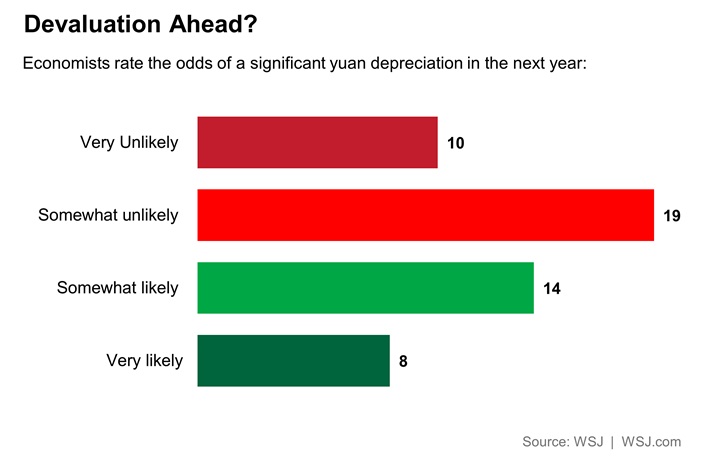
There are great extent of debates going among economists, analysts and market participants over whether Yuan will get devalued significantly in 2016 or not.
Those favoring devaluation arguments, suggesting, Yuan will get devalued significantly (greater than 6%) in 2016 as it is in China's interest to devalue the Yuan to improve upon its falling exports. Moreover, PBoC will increase policy accommodation further in 2016, which would be Yuan negative at a time when FED reserve will hike rates further. China's high corporate debt and declining reserve will add to the mix.
Others suggest, despite lessening grip over Yuan's movement, PBoC would nevertheless would manage with an iron fist and improvement in global growth would improve China's export and economic outlook in 2016. Lower commodity prices including energy, would boost China's domestic consumption significantly. They expect, Yuan to go through more controlled depreciation, lower than 5% and in line with this year's 4% decline.
According to result, poll conducted by Wall Street Journal (WSJ), only 43% of economists think significant devaluation is likely, while about 16% think it's very likely, compared to 20% considering it to be very much unlikely.
Yuan is down for seventh consecutive day today, trading at 6.468 per Dollar.







