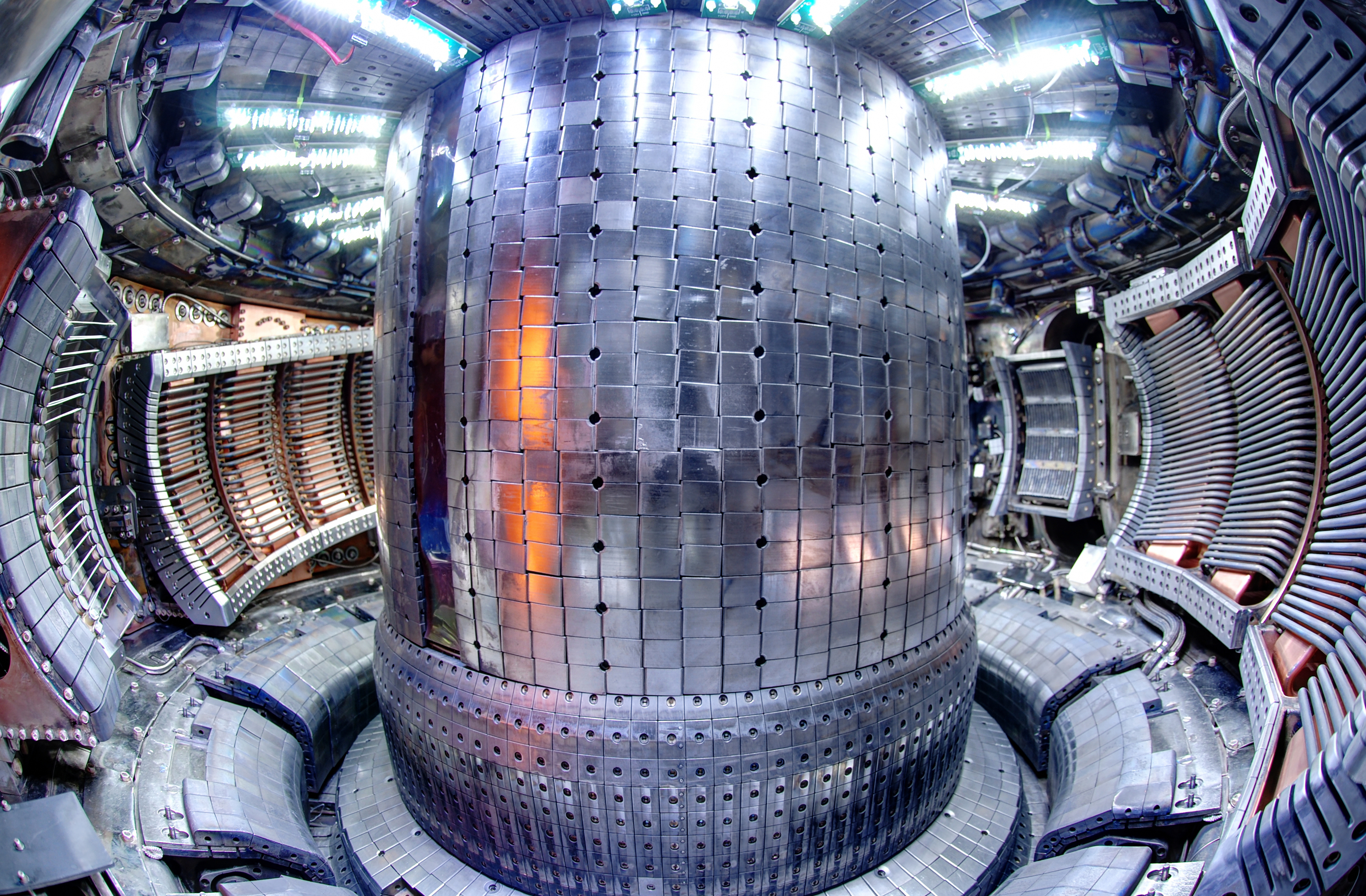
With the world facing an energy crisis, one of the most promising resources that scientists are looking at is fusion energy. This is basically like harnessing the power of the sun and using it to generate electricity. While there are still a few stumbling blocks that prevent actual nuclear fusion from happening, researchers still managed to make a few improvements that increased output by a factor of 10.
The researchers published their findings in the Nature Physics journal, where they describe adding an extra ion into two-ion plasma cocktail that scientists have traditionally stuck with. The result is an increase in power output by 1,000 percent.
“We describe a new technique for the efficient generation of high-energy ions with electromagnetic ion cyclotron waves in multi-ion plasmas. The discussed ‘three-ion’ scenarios are especially suited for strong wave absorption by a very low number of resonant ions…” the paper’s Abstract reads. “The obtained results demonstrate efficient acceleration of 3He ions to high energies in dedicated hydrogen–deuterium mixtures. Simultaneously, effective plasma heating is observed, as a result of the slowing-down of the fast 3He ions. The developed technique is not only limited to laboratory plasmas, but can also be applied to explain observations of energetic ions in space-plasma environments, in particular, 3He-rich solar flares.”
In order to test the viability of the method, the Joint European Torus (JET), which is the largest fusion reactor in the world was used. The researchers confirmed that this was indeed the case.
As Futurism notes, fusion energy won’t hit its stride until at least 2030. However, knowing that humanity can count on such huge energy capacity in the future is encouraging. It will go a long way towards replacing practically every type of energy source that the world has now, thus leading to a more prosperous and cleaner future.