


 Djibouti Migrant Boat Capsizes, Killing 139 and Leaving 84 Missing
  Pakistan Declares Emergency in Khyber Pakhtunkhwa, Suspends Imran Khan’s PTI Government
  Mahmoud Abbas Postpones Palestinian Elections to September 2027
  Houthis Warn Saudi Airports After Deadly Riyadh Attack
  UK Finance Minister Healey Calls for Fiscal Discipline Amid Global Risks
  Kim Jong Un Showcases ICBM Ahead of Possible Trump Meeting
  European Auto Stocks Rise as EU-China Trade Deal Targets Hybrid Imports
  Trump Defends Russian Diesel Deal Amid US Sanctions Backlash
  Trump Announces Russia-Ukraine Energy Ceasefire Amid U.S. Pressure on Kyiv
  Most Americans Oppose Election Betting on Prediction Markets, Poll Finds
  Trump Announces Russia-Ukraine Energy Ceasefire as Zelenskiy Awaits Details
  US Condemns China Sanctions on Taiwan Allies Belize and Paraguay
  Trump Denies Russia and China Are Helping Iran in U.S. Conflict
  NATO Commander Warns Russia of Devastating Response to Attack
  North Korea Fires Ballistic Missiles as Tensions With South Korea Escalate
  Panama Declares Emergency After 7.7 Earthquake Triggers 200 Aftershocks
  Russian Strikes Kill Six in Ukraine, Including Three in Kharkiv


 Add as a preferred source on Google
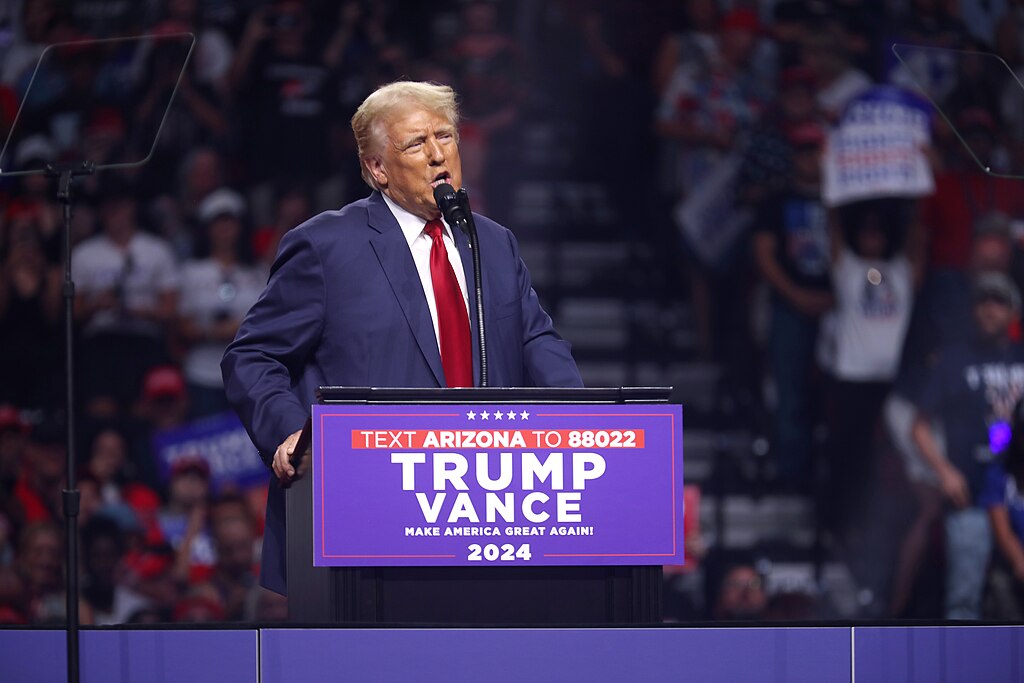
A recent Quinnipiac University poll reveals that former President Donald Trump is currently favored to win the popular vote in the 2024 presidential election, marking a significant shift for the Republican Party. If these predictions hold, Trump would be the first Republican candidate to win the popular vote since George W. Bush’s re-election in 2004. The findings reflect a potential change in electoral dynamics and underscore Trump’s enduring influence on the GOP as he vies for a return to the White House.
The results of this poll come as a surprise to political analysts who have witnessed Republicans struggle to win the popular vote in recent presidential elections. Since Bush’s 2004 victory, Republican candidates have consistently fallen short in the national popular vote, despite winning the presidency in 2016 when Trump triumphed via the Electoral College while losing the popular vote to Hillary Clinton by nearly three million votes. Now, as Trump mounts another bid for the presidency, polling data suggests a notable shift in public sentiment, raising questions about what is driving this potential reversal.
Key to Trump’s apparent popularity is his ability to energize his core base of supporters while appealing to swing voters who may have felt disillusioned with both major parties. His platform, which continues to focus on issues like immigration, economic recovery, and skepticism toward global institutions, appears to resonate with a significant portion of the electorate. Trump’s messaging, often geared toward working-class voters and disaffected Republicans, has also garnered attention in battleground states crucial to winning both the popular vote and the Electoral College.
Another factor behind Trump’s surge in popular vote support may be the economic conditions in the United States, particularly inflation and concerns about jobs. Voters grappling with economic uncertainty could be more inclined to support Trump, who has repeatedly framed himself as a champion of economic growth and nationalistic policies. His campaign is likely to emphasize his previous tenure in the White House, during which he will highlight economic achievements prior to the COVID-19 pandemic.
However, while Trump’s popularity has seen an upswing, political observers caution that polling data is far from a definitive predictor of election outcomes. The Electoral College system, which ultimately determines the presidency, can result in different outcomes than the popular vote, as demonstrated by Trump’s own victory in 2016. Additionally, voter turnout, campaign strategies, and unforeseen events could still shape the 2024 race in unexpected ways.
Despite the Quinnipiac poll’s findings, Trump remains a polarizing figure in American politics, and his potential candidacy has reignited intense debates within both the Republican Party and the broader electorate. His critics argue that Trump’s divisive rhetoric and legal challenges could alienate moderate voters, while his supporters view him as the candidate most capable of addressing the country’s pressing concerns.
Disclaimer: EconoTimes cannot independently verify the accuracy of the Quinnipiac poll’s findings or predict future electoral outcomes.
As the 2024 election cycle intensifies, this new poll suggests that Trump’s dominance within the GOP remains strong, positioning him as a formidable contender. Whether Trump will be able to convert this polling advantage into a popular vote victory—and break the Republican Party’s two-decade drought—remains to be seen. With months of campaigning ahead, the political landscape could shift dramatically before voters head to the polls next November.







