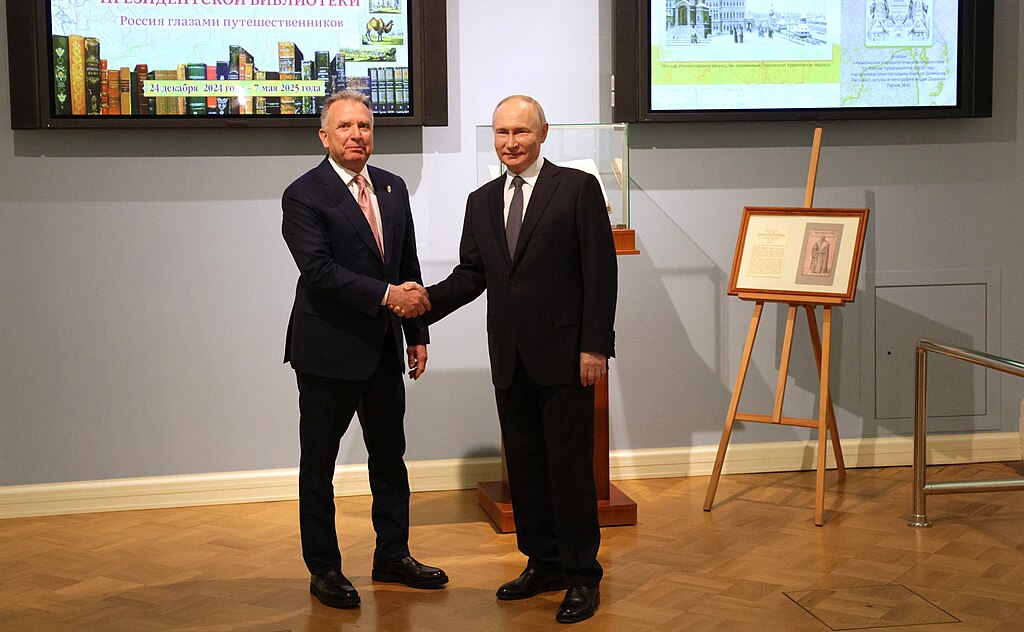
Russia has announced plans to hold security talks with the United States and Ukraine in Abu Dhabi on Friday, signaling continued diplomatic engagement while warning that a lasting peace will remain out of reach unless territorial disputes are resolved. The announcement followed a late-night meeting between Russian President Vladimir Putin and three U.S. envoys, a discussion that the Kremlin described as candid but cautious in terms of outcomes.
Kremlin aide Yuri Ushakov said the talks, which began shortly before midnight and lasted nearly four hours, were “useful and extremely frank.” Despite the constructive tone, Ushakov emphasized that no major breakthrough had been achieved. He reiterated Russia’s position that resolving territorial issues is a prerequisite for any durable peace agreement, referencing a formula discussed during last year’s Trump–Putin summit in Anchorage, Alaska.
According to Ushakov, Russian Admiral Igor Kostyukov will lead Moscow’s delegation at the upcoming three-way security talks. Separately, Kirill Dmitriev, Russia’s investment envoy, is set to meet with U.S. envoy Steve Witkoff to discuss economic matters. Ushakov stressed that President Putin remains “sincerely interested” in a diplomatic solution but warned that Russia will continue pursuing the objectives of its so-called special military operation until its conditions are met, particularly as Russian forces maintain what Moscow calls the strategic initiative on the battlefield.
The Russian delegation included Putin, Ushakov, and Dmitriev. On the U.S. side, Witkoff was joined by Jared Kushner, President Donald Trump’s son-in-law, who previously met Putin in the Kremlin in early December. They were accompanied by Josh Gruenbaum, recently appointed as a senior adviser to Trump’s Board of Peace, a body intended to address major global conflicts.
These discussions mark another step in President Trump’s broader push to end the ongoing war in Ukraine, now nearing its fourth year and considered the deadliest conflict in Europe since World War II. While diplomatic channels remain open, deep divisions over territory continue to cast doubt on the prospects for a long-term settlement.