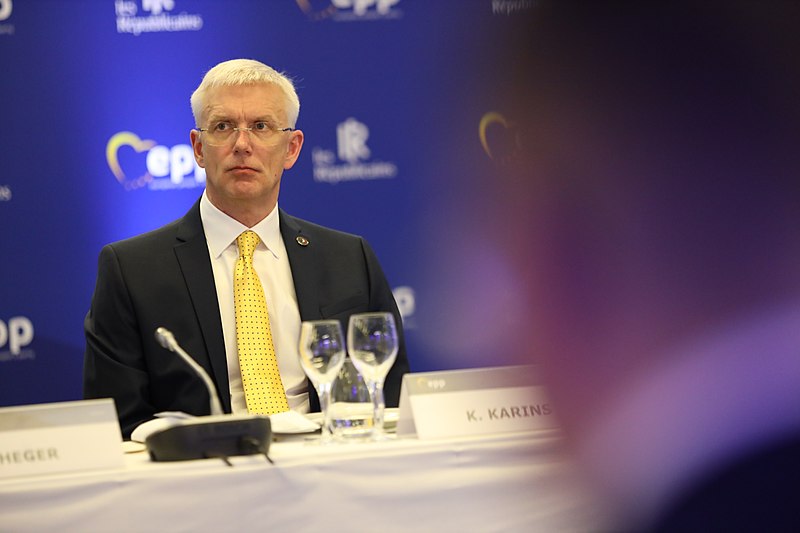
Latvian Prime Minister Krisjanis Karins said traders are using Turkey, Armenia, and Kazakhstan to evade the EU sanctions imposed on Russia. Karins called for further cooperation in order to close the loopholes.
Following talks with the leaders of Estonia and Lithuania Friday last week, Karins said traders are using Turkey, Armenia, and Kazakhstan to legally trade goods while dodging the bloc’s sanctions on Russia. Karins cited a disproportionate increase in European trade within the three countries compared to the past.
“It seems quite clear that traders are finding ways to legally trade goods, say with Turkey, Kazakhstan, or Armenia which are then resent to Russia because these countries are not adhering to the sanctions regime,” Karins told reporters at Estonia’s capital Tallinn. Karins did not provide any further evidence of sanctions evasion and did not specify the kinds of goods that were allegedly being traded.
“One is to work with these countries, to get them on board also following the sanctions. The second is to look for legislation across Europe, to make sure that we criminalize sanction avoidance,” said Karins. “Close the loopholes!”
Turkey has condemned Russia’s invasion of Ukraine and has sent armed drones to Kyiv. However, Ankara has opposed the West’s sanctions on Russia and has close ties with both Russia and Ukraine. Turkey has also increased tourism and trade with Russia, and some Turkish companies have looked to buy Russian assets from Western partners, and others maintain large assets in Moscow.
Germany’s prosecutor-general said Berlin was able to collect evidence of war crimes committed in Ukraine and that there was a need for the judicial process at an international scale.
In an interview with the German Welt am Sontag newspaper published on Saturday, Peter Frank said Germany started collecting evidence of war crimes as early as March 2022, including interviewing Ukrainian refugees and assessing publicly available information. Frank noted, however, that Gerrman prosecutors have yet to interview certain individuals.
“Currently, for example, we are focusing on the mass killings in Bucha or attacks against Ukrainian civilian infrastructure,” said Frank, adding that prosecutors have so far found evidence in the “three-digit range.”
“We are preparing ourselves for a possible later court case – be it with us in Germany, be it with our foreign partners, be it before an international court,” said Frank.