


 South Korea Warns Ukraine Over North Korean POW Dispute
  Trump Taps Dennis Rodman as Kim Jong Un Outreach Continues
  Pentagon Launches Autonomous Warfare Command
  TRUMP Memecoin Launches New Dinner Contest
  Netanyahu Says Israel May Join Flydubai Crash Attempt Probe
  Trump Demands Powell Resign Over Fed Renovation Cost Overruns
  California Leads Lawsuit Over Trump’s $810 Million Funding Cuts
  New Zealand Election Raises Policy Uncertainty for Investors
  Trump Says He Raised Political Prisoners With Xi
  Marco Rubio to Visit Iceland, Greece and Portugal
  Iran Plans Stronger Response if US Attacks Resume
  Israeli Settler Attack in West Bank Kills Palestinian
  US Waives $320M Egypt Military Aid Conditions After Iran War Role
  Trump Praises Boeing 737 Max After Flydubai Crash Attempt
  Tsai Ing-wen to Visit US for Stanford Security Conference
  TSA Removes Chairs for Airport ID Check Officers
  US Appeals Court Keeps Trump IRS Case Sanctions in Place


 Add as a preferred source on Google
Ukrainian forces succeeded in reclaiming the key territory of Kherson in recent weeks in the midst of advances in the eastern and southern territories. Officials said that civil servants working for the Russian-installed administration in Kherson have also left the second city in Kherson.
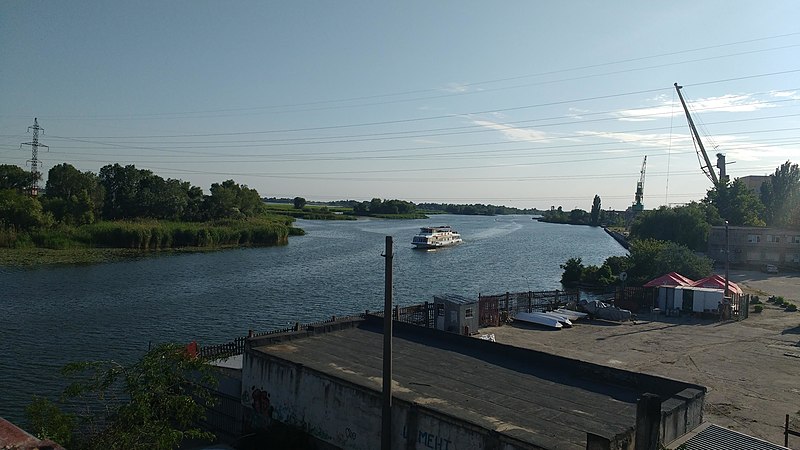
Officials said Tuesday that civil servants that were working for the Russian-installed government in Kherson left their posts in the second-largest city in Kherson, Nova Kakhovka. The city is found on the east bank of the Dnipro river and next to the Kakhovka dam, where both Ukraine and Russia traded blame over the shelling of the area. The city also adjoins Tavriisk, close to the North Crimean Canal, the freshwater source of the Russian-annexed Crimean peninsula.
“After the well-known events of Nov. 11, when Russian troops were ordered to withdraw from the right bank of Kherson region, Nova Kakhovka found itself under direct fire from large-caliber artillery and mortars of the armed forces of Ukraine,” said the Russian-installed administration.
“Indiscriminate fire from the left bank of the Dnipro has made life in the city unsafe…Thousands of Nova Kakhovka residents responded to the call of the Kherson regional administration to protect their lives and left their homes,” said the administration.
Following the withdrawal of Russian forces from Kherson, the focus appears to be on the Russian-occupied towns and settlements on the east bank. Despite the images and videos of Russian forces abandoning Kherson, Ukrainian President Volodymyr Zelenskyy told world leaders that Ukraine would continue its momentum to drive Russian forces out following the reclaiming of Kherson.
NATO Secretary-General Jens Stoltenberg said Monday that the decision on negotiations with Moscow lies with Ukraine. However, Stoltenberg warned against underestimating Russia, citing its capabilities and the number of troops. Stoltenberg also said that the winter months would pose a challenge in the war, as Russian leader Vladimir Putin’s goal is to “leave Ukraine cold and dark.”
Stoltenberg stressed that Ukraine alone would decide which terms are acceptable when it comes to returning to negotiations with Russia to end the war and that the NATO alliance can only support Kyiv and strengthen its side.







