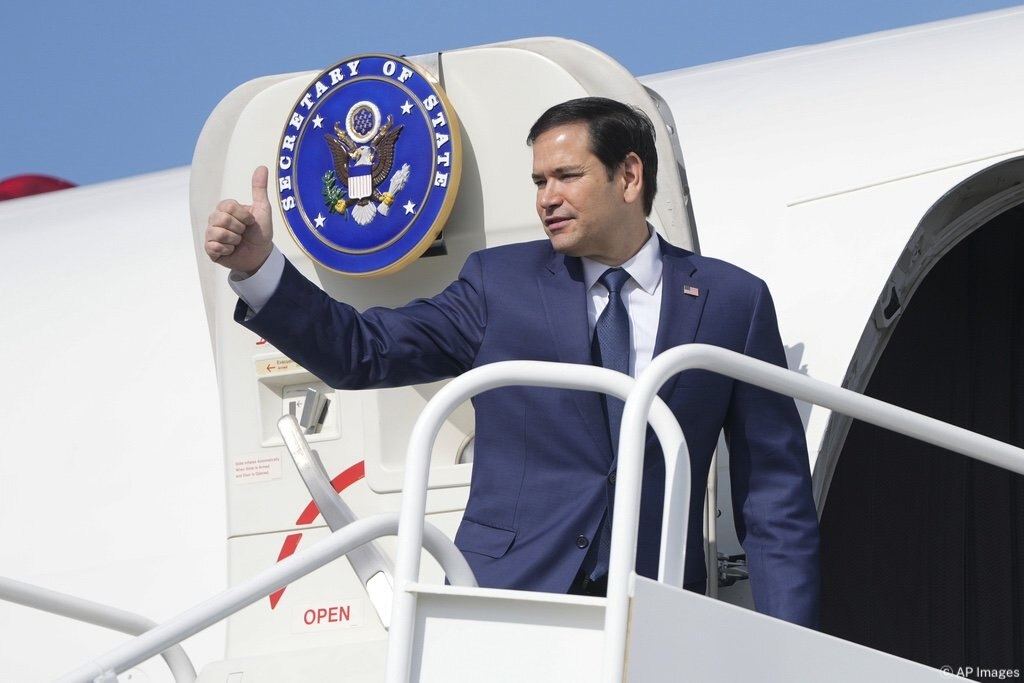
U.S. Secretary of State Marco Rubio said the United States is moving quickly to establish a new governance framework for Gaza, signaling a major shift in post-war planning for the Palestinian enclave. Speaking at a year-end press conference, Rubio said Washington views the current situation in Gaza as unsustainable and is working to cement a fragile ceasefire following Israel’s ongoing conflict with Hamas.
Rubio outlined a multi-phase plan that would begin with the creation of an international “Board of Peace” alongside a Palestinian technocratic authority made up of non-partisan experts. This governing structure would be followed by the deployment of an International Stabilization Force (ISF), consisting of foreign troops, to help maintain security on the ground. The initiative aims to prevent a return to violence and lay the groundwork for long-term stability in Gaza.
According to Rubio, progress has already been made in identifying Palestinian professionals to join the technocratic governing body. While he did not offer a specific timeline, he said the U.S. expects the new governance institutions to be established “very soon.” His remarks came shortly after U.S. Central Command hosted a multinational planning conference in Doha focused on the ISF.
Reuters previously reported that international troops could be deployed to Gaza as early as next month, following a United Nations Security Council vote in November authorizing the stabilization force. However, significant questions remain unresolved, including how Hamas would be disarmed and what the precise mandate and funding structure of the ISF would be.
Rubio acknowledged that potential troop-contributing nations are seeking clarity before making firm commitments. He expressed confidence, however, that several countries acceptable to all parties are prepared to participate, noting that Pakistan has shown interest.
Establishing credible governance and security is essential to attracting international donors for Gaza’s reconstruction, Rubio said. Without stability, he argued, nations will be reluctant to pledge billions of dollars for rebuilding efforts that could be destroyed by renewed conflict.