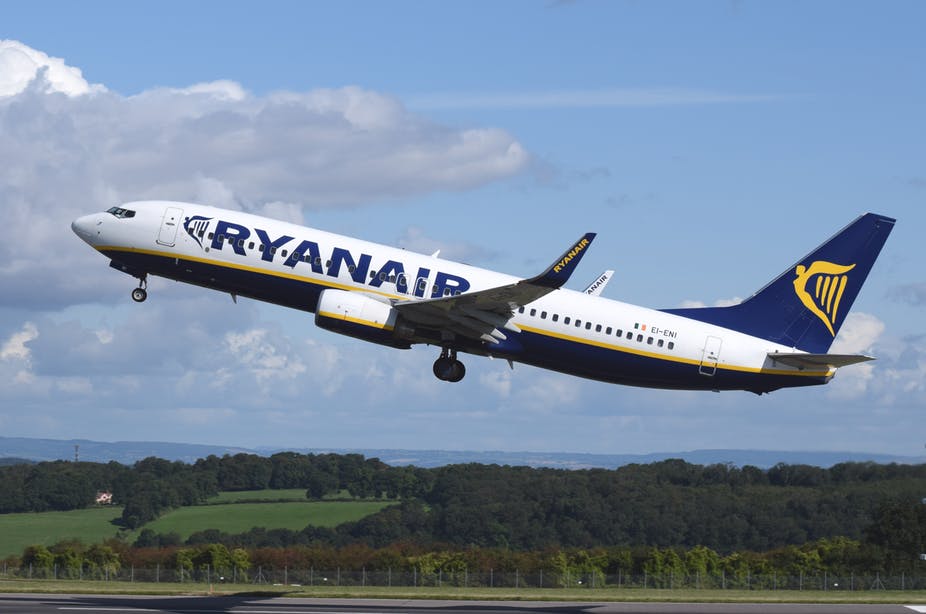
Ryanair Holdings Plc reported a sharp decline in third-quarter profit, weighed down by a significant exceptional charge linked to a fine from Italy’s competition authority, even as revenue and passenger traffic continued to grow. The low-cost airline said profit after tax for the quarter ended December 31 fell to €30 million, down from €149 million a year earlier, after accounting for exceptional items.
The profit drop was mainly driven by an €85 million exceptional charge, representing roughly one-third of a €256 million fine imposed in late December by Italy’s antitrust authority, AGCM. Excluding exceptional items, Ryanair’s profit before tax declined 22% year-on-year to €115 million, compared with €149 million in the same period last year.
Despite the profit pressure, Ryanair delivered solid top-line growth. Revenue rose 9% to €3.21 billion, supported by higher passenger numbers and increased fares. Passenger traffic grew 6% to 47.5 million travelers during the quarter, while the average fare increased 4% to €44. The airline’s load factor remained stable at a strong 92%, highlighting continued demand across its network.
Scheduled revenue increased 10% to €2.10 billion, while ancillary revenue, including add-on services, climbed 7% to €1.11 billion. Operating costs before exceptional items rose 6% to €3.11 billion. Fuel and oil costs increased to €1.26 billion, staff costs reached €451 million, and airport and handling charges rose to €403 million. Route charges climbed to €311 million, and depreciation expenses increased to €326 million.
Ryanair also noted that the absence of delivery delay compensation reduced other income compared with the prior year. Net finance and other income fell sharply to €9 million from €90.2 million previously.
For the nine months ended December 31, Ryanair reported profit after tax of €2.57 billion, up from €1.94 billion a year earlier. Revenue for the period rose 12% to €13.03 billion, with passenger traffic increasing to 166.5 million. The airline ended December with gross cash of €2.4 billion and net cash of around €1 billion, supported by disciplined capital management and fuel hedging through fiscal 2027.