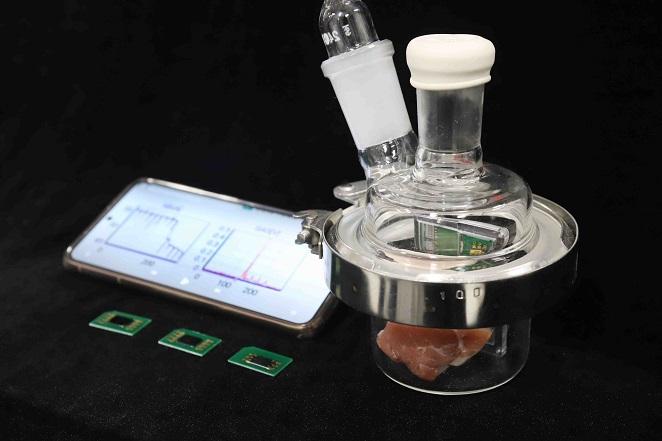
The Korea Research Institute of Bioscience and Biotechnology developed a portable ‘electronic nose’ that can check in real-time whether meat has spoiled.
The research team developed the electronic nose by creating two types of new compounds that can react to foul-smelling compounds and putrescine and applying them to a bionano sensor.
Cadaverine and putrescine generate bad odors caused by meat decay.
The portable electronic nose uses a small battery and features an easy-to-replace sensor.
Kwon Oh-seok, a researcher at the Korea Research Institute of Bioscience and Biotechnology, noted that the electronic nose not only measures meat freshness but also provides data on the correlation of various factors affecting meat decay, including temperature and humidity.
SpaceX Starship Explodes in Texas During Test, Citing Nitrogen Tank Failure
Oil Prices Slip Slightly as Markets Weigh Geopolitical Risks and Supply Glut Concerns
Wall Street Ends Mixed as Tech and Financial Stocks Weigh on Markets Amid Thin Holiday Trading
NASA Cuts Boeing Starliner Missions as SpaceX Pulls Ahead
China LNG Imports Rise in December as Long-Term Contracts Drive Growth
South Korea Inflation Rises to 2.3% in December, Matching Market Expectations
Vietnam Central Bank Faces Challenges Meeting 2026 Economic Growth Target Amid Global Uncertainty
Trump Administration to Launch Autism Initiatives Targeting Acetaminophen Use and New Treatment Options
Trump and Merck KGaA Partner to Slash IVF Drug Costs and Expand Fertility Coverage
South Korea Exports Hit Record High as Global Trade Momentum Builds
Asian Stock Markets Trade Narrowly as Year-End Volumes Thin, KOSPI Outperforms on Tech Rally
European Markets Mixed as Pound Weakens and Major Corporate Deals Emerge
Forex Markets Hold Steady as Traders Await Fed Minutes Amid Thin Year-End Volumes
Is space worth the cost? Accounting experts say its value can’t be found in spreadsheets
Neuren Pharmaceuticals Surges on U.S. Patent Win for Rare Disorder Drug
U.S. Dollar Slides Toward Biggest Annual Loss Since 2017 as 2026 Risks Loom 


