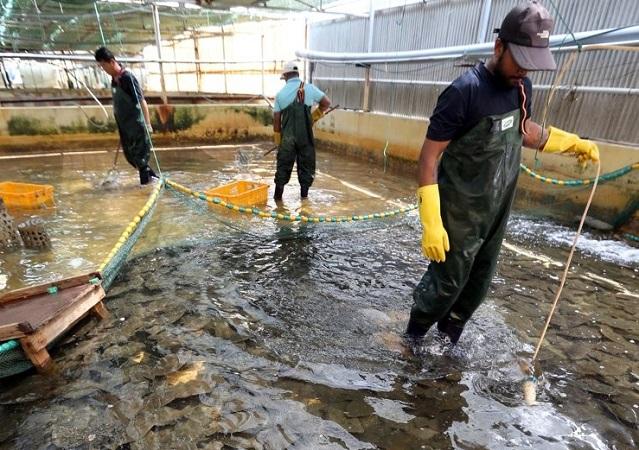
South Korea’s state-run rural development agency Korea Rural Community Corp addressed the problems of land-based fish farms on water temperature through the exploration of underground seawater.
Enclosures constructed on land and filled with surrounding seawater are used to farm flatfish, abalone, and cockles.
As a result, fish farms incur enormous costs as the warm seawater needs to be cooled in the summer and heated in the winter.
In response to demands from municipal governments and fish farms the agency, which has extensive experience in the use of water for agricultural use, started a study in 2010 to investigate subsurface seawater utilization.
There have been 716 wells dug thus far in 148 areas, 279 of which are utilized to deliver subsurface seawater to on-land fish farms.
Underground seawater maintains a consistent temperature of 14 to 18°C despite having reduced salinity, which helps to lower cooling or heating costs. Additionally, red tide and marine pollution are not a problem.