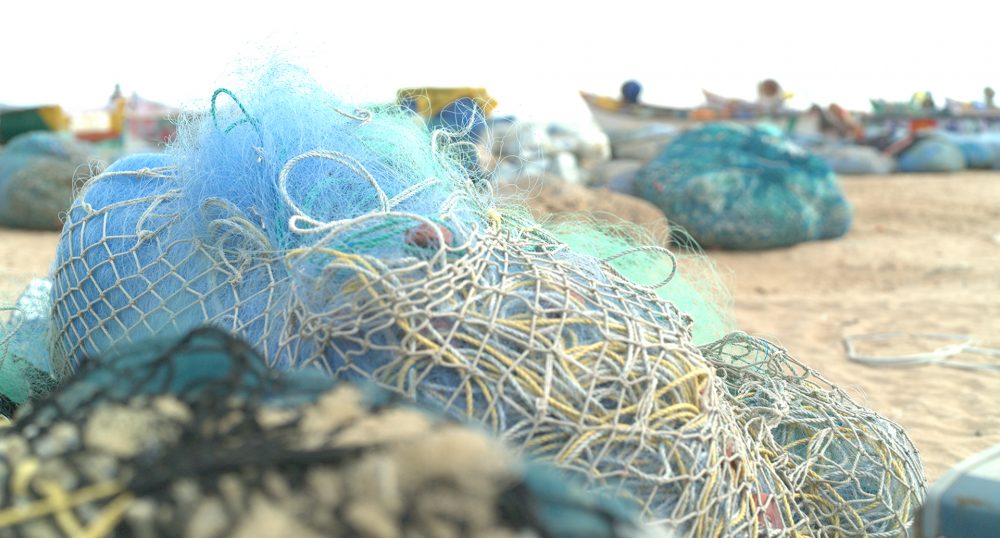
Samsung Electronics Co. said that plastic parts it recycles from discarded ocean-bound fishing nets dubbed “ghost net plastic” are more effective in cutting back on carbon emissions than other plastic types.
The company uses the “ghost net plastic” to produce the company’s Galaxy S22 and Galaxy S8 smartphones and Galaxy Book 2 Pro laptops, all released earlier this year.
According to the life cycle assessment (LCA) conducted by the US-based safety certification company UL, carbon emissions from the manufacturing of one ton of OM-52 recycled plastic were 3.3 tons, which was 25 percent less than that of a ton of regular plastic (MS-51).
Fishing nets were gathered from the Indian Ocean and cut, cleaned, and compacted before being recycled into polyamide resin pellets.
Pellets have been used to create key brackets for the Galaxy S22 series, the interior of the Galaxy S22 Ultra's S-pen cover, and touchpad holders and bracket interiors for the Galaxy Book 2 Pro series.