


 Moonshot AI Executives Seek Settlement Ahead of Hong Kong IPO
  Samsung, SK Hynix Shares Plunge as China Chip Competition Grows
  Solidigm Taps Goldman, Morgan Stanley for $10 Billion US IPO
  TSMC Profit Set to Surge 65% as AI Chip Demand Drives Record Earnings
  TSMC Q3 Revenue Beats Estimates as AI Chip Demand Surges
  Elon Musk Eyes Semiconductor Manufacturing Expansion With $15 Billion Terrafab Project
  OpenAI Revenue Hits $50 Billion, Below Earlier $70 Billion Estimate
  Trump Buys Up to $25M in Meta Stock, Invests in SpaceX Debt
  Meta Launches Muse Wonder AI Models, Shares Rise 3.7%
  Jameson Lopp Downplays AI Threat to Bitcoin Cryptography
  Yandex Data Center Hit by Drone Strike as Russia-Ukraine Cyber Infrastructure Attacks Escalate
  Apple Cuts iPhone 18 Pro Production Orders Amid Weak Demand
  Apple Supplier Luxshare Sees Limited Impact From US Patent Probe
  Oracle Uses Trucked Natural Gas to Power AI Data Centers Amid Pipeline Delays
  US Suspends Microsoft, Adobe From Green Card Program
  OpenAI Annualized Revenue Hits $50 Billion, Below Earlier Estimates


 Add as a preferred source on Google
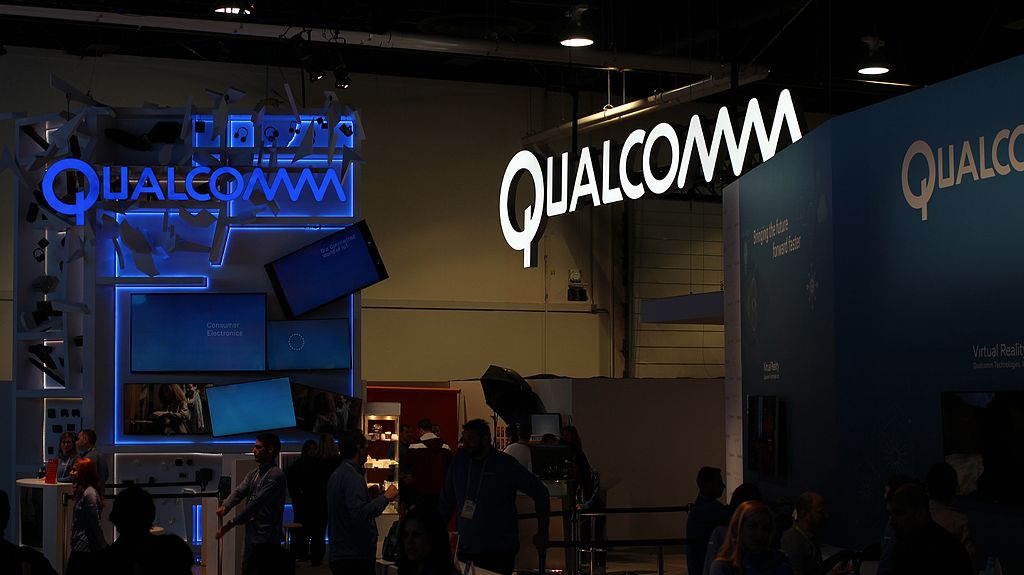
Qualcomm has already confirmed a key aspect of the Snapdragon 8 Gen 4, and an executive has now disclosed a release date for the upcoming smartphone chipset.
Qualcomm Confirms Snapdragon 8 Gen 4 Is Coming And Here's When To Expect It
Don McGuire, chief marketing officer of Qualcomm, confirmed at the Snapdragon Summit in October via a video uploaded to X (spotted by FoneArena) that the Snapdragon 8 Gen 4 would be available.
The Snapdragon 8 Gen 2 and Snapdragon 8 Gen 3 were officially introduced in October 2022 and October 2023, respectively, so this development is not entirely unexpected. Thus, the release date of the new chip is consistent with this trajectory.
McGuire reaffirmed that Oryon CPU technology would be incorporated into the Snapdragon 8 Gen 4. As the company verified this information a year ago, off-the-shelf Arm CPUs may not experience a significant increase in performance.
This week, the American chip designer also unveiled the FastConnect 7900 connectivity suite. This wireless connectivity platform features incorporated UWB capabilities and is anticipated to be included in the Snapdragon 8 Gen 4. This indicates that by 2025, a greater number of high-end Android smartphones will support UWB.
Regrettably, smartphones equipped with the Snapdragon 8 Gen 4 may be more expensive than existing models. Qualcomm has previously stated that it anticipates the forthcoming chipset to surpass the Snapdragon 8 Gen 3 in terms of cost by a certain amount.
Qualcomm Snapdragon 8 Gen 4 Power Draw Revealed
In January, leaks indicated that it would comprise two Phoenix M cores and six Phoenix L cores. Qualcomm has appropriately assigned it the internal pseudonym Sun, given the veracity of certain rumors concerning its power consumption.
DCInside, a South Korean technology forum, states in a post that one of its high-performance processors can consume up to 5.47 Watts. The sum of the power outputs of both engines is 9.32 Watts.
These are the Nuvia (likely Phoenix L) processors developed by Qualcomm, not commercial Arm Cortex variants. In a similar fashion, each Phoenix M core consumes 1.1 Watts when under duress. Under full-core conditions, the Snapdragon 8 Gen 4 can consume up to 14.2 Watts of power.
These numbers were obtained from an early engineering sample of the Snapdragon 8 Gen 4 and are subject to change in the months preceding its release. 14 watts is slightly excessive for the form factor of a smartphone and will necessitate a robust cooling solution to control temperatures.
In conjunction with the enhanced transistor density facilitated by TSMC's N3E process, this should bestow upon the Snapdragon 8 Gen 4 the necessary competitive advantage to contend with the Exynos 2500 from Samsung and the MediaTek Dimensity 9400.
Photo: Maurizio Pesce from Milan, Italia, CC BY 2.0, via Wikimedia Commons








.jpg)