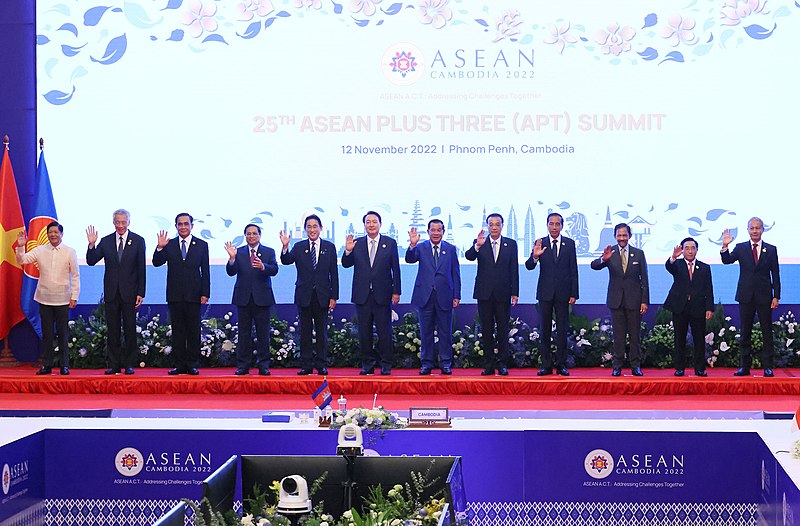
Indonesia plans to increase talks with China and its fellow countries under the Association of Southeast Asian Nations for a code of conduct over the highly disputed South China Sea. The plans come amidst increasing tensions in the body of water, which Beijing claims control over.
As the ASEAN chair for this year, Indonesian foreign minister Retno Marsudi said Saturday that Jakarta is planning on ramping up talks with the bloc and with China over a code of conduct in the South China Sea. Marsudi’s comments came during a meeting among ASEAN foreign ministers in Indonesia’s capital.
“ASEAN’s outlook on the Indo-Pacific was central to the discussion,” said Marsudi. “We also discussed about the COC, the commitment of members to conclude the negotiation of the COC as soon as possible.”
Marsudi added that Indonesia was preparing to host a round of negotiations for the COC this year, the first round taking place in March.
Negotiations over the code of conduct were stalled for years as some member countries in the 10-member bloc prioritized having bilateral ties with China over a regional consensus. The COC was a proposed framework that would help address territorial and maritime disputes in the South China Sea.
China claims to have control over the majority of the South China Sea, angering the surrounding countries, including Taiwan, who have overlapping claims to the body of water. A 2016 international tribunal ruled against China, saying its so-called historical claims over the sea have no basis under international law.
While Indonesia is not an official claimant over parts of the South China Sea, it was criticized by China for its exploration of oil and gas reserves in the North Natuna Sea. In January, Indonesia sent a warship to monitor a lingering vessel of the Chinese coast guard.
Last week, the Philippines granted the United States expanded access to its military bases following a visit to Manila by US defense secretary Lloyd Austin.
The US would be given expanded access to an additional four military bases under the 2014 Enhanced Defense Cooperation Agreement, Austin and Philippine defense secretary Carlito Galvez announced at a joint news conference at the Philippine military headquarters in Manila.
“Our alliance makes both of our democracies more secure and helps uphold a free and open Indo-Pacific,” said Austin.