


 Moonshot AI Executives Seek Settlement Ahead of Hong Kong IPO
  Solidigm Taps Goldman, Morgan Stanley for $10 Billion US IPO
  OpenAI Revenue Hits $50 Billion, Below Earlier $70 Billion Estimate
  Oracle Uses Trucked Natural Gas to Power AI Data Centers Amid Pipeline Delays
  NASA's Artemis II Crew Arrives in Florida for Historic Moon Mission
  Neuralink Plans High-Volume Brain Implant Production and Fully Automated Surgery by 2026
  Eli Lilly’s Inluriyo Gains FDA Approval for Advanced Breast Cancer Treatment
  Trump Signs Executive Order to Boost AI Research in Childhood Cancer
  China vs. NASA: The New Moon Race and What's at Stake by 2030
  Blue Origin New Glenn Rocket Explodes During Launch Pad Test, Delaying Space Ambitions
  Yandex Data Center Hit by Drone Strike as Russia-Ukraine Cyber Infrastructure Attacks Escalate
  SpaceX Pivots Toward Moon City as Musk Reframes Long-Term Space Vision


 Add as a preferred source on Google
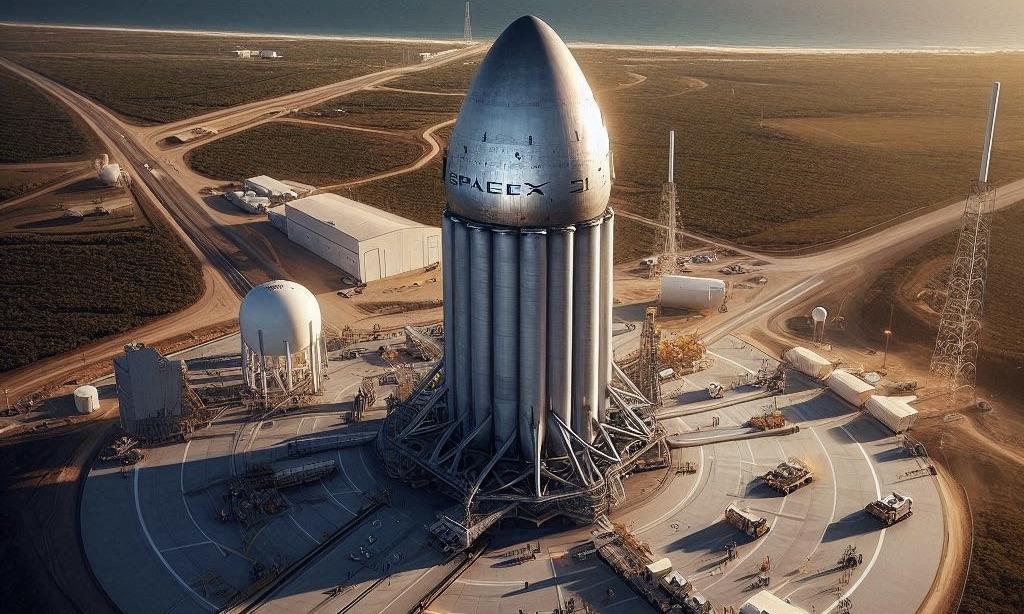
SpaceX has moved its rocket booster to the launch pad for the fifth Starship test flight, following a series of prelaunch tests. This test, set for next month, includes the unprecedented attempt to catch the first stage booster using tower arms, marking a crucial step for future missions.
SpaceX Prepares for Historic Flight 5 as Starship Booster Reaches Launch Pad for Tower Catch Test
SpaceX relocated its rocket booster for the fifth Starship test flight to the launch pad following a succession of tower arm catch tests last month. SpaceX verified the relocation shortly after local media footage revealed that the 232-foot rocket booster required over three hours to transport to the launch site. According to Wccftech, SpaceX conducts prelaunch tests on its rockets by activating their engines and pressurizing their canisters to guarantee they are operational. SpaceX may also attempt to capture the first stage of the Starship with the launch tower during Flight 5, a distinctive recovery strategy designed to minimize the duration of subsequent rocket launches.
The fifth test flight of Starship next month is the most difficult due to SpaceX's pioneering intention to attempt to capture the first stage booster using the tower catch arms. The test will be essential for the Starship program's future, as SpaceX must rapidly launch its rockets to undertake critical Moon missions for NASA and its planned Mars colonization missions. This will be the first endeavor of its kind in the industry's history, and SpaceX is also constructing a second launch tower at its Texas site to ensure the Starship flights are redundant.
SpaceX initiated the deployment of its projectile for the fifth Starship flight earlier today, as evidenced by footage from local media outlets. The rocket arrived at the pad after a three-and-a-half-hour journey, and SpaceX subsequently verified the move in a post on its X page.
SpaceX Gears Up for Fifth Starship Flight with Extensive Pre-Launch Testing and Historic Tower Catch Attempt
According to recent statements from SpaceX CEO Elon Musk, the organization intends to conduct its fifth flight of the entire Starship stack early next month. It performs numerous tests on the first and second stages of the rockets before the test flight. These include damp dress rehearsals, engine static fires, and tank pressurization. SpaceX has yet to static fire its rockets for the fifth Starship voyage. A static fire is one of the final pre-flight tests. If it is successful, a wet dress rehearsal is typically conducted to simulate launch day by loading the complete stack with fuel.
Although a tower catch attempt is the most significant item for Starship Flight 5, even if it is successful, SpaceX will need to conduct other critical experiments shortly. These include the second stage's propellant transfer operations in space, a crucial deliverable for SpaceX's multi-billion-dollar NASA contract to land the first humans on the Moon since the Apollo program.
SpaceX has affirmed that it will repurpose the Super Heavy booster by catching it with the launch pad, but limited details regarding the Starship's second stage are available. The second stage was the subject of some of Starship's initial experiments, and the rocket could land on its legs at that time.
The Coast Guard, the FAA, local county officials in Cameron County, Texas, and NASA's imaging aircraft schedule are all key indicators that will suggest a tentative launch date. The space agency meticulously monitors each Starship flight to assess SpaceX's advancement. Additionally, there is a potential for SpaceX to be granted an expedited launch license from the FAA based on the flight profile of Flight 5, which could accelerate the mission and bring us closer to the future of space exploration.
Photo: Microsoft Bing







