We keep urging often and often concentration on demand/supply equation is the genuine fundamentals than anything else cooking around the world. And this in turn evidenced here, the surge in futures of crude oil over a recent period explains the why and how price actions behave. It is quite simple, disparity between streets and oil producers when slumping oil prices. The financial community betting that the oil price cycle may turn more quickly than the industry expects.
Brent crude delivery was down 30 cents at USD 64.55 a barrel by, after settling USD 2.12 higher on Thursday. The benchmark touched its highest since Dec. 10 at USD 65.58 on Thursday. US crude for June delivery dropped 36 cents to USD 57.38 a barrel, after settling up USD 1.58. The front-month contract hit a 2015-high of USD 58.41 on Thursday and is on course for its sixth straight weekly gain.
Oil prices on Friday edged down from 2015-highs reached in the previous session, but prices remained on track for weekly gains after renewed air strikes in Yemen stoked concerns on the security of Middle East oil shipments. Crude prices on both sides of the Atlantic have surged almost USD 10 a barrel this month amid rising tension in the Middle East, while slowing US production growth and signs of stronger global demand have also provided support.
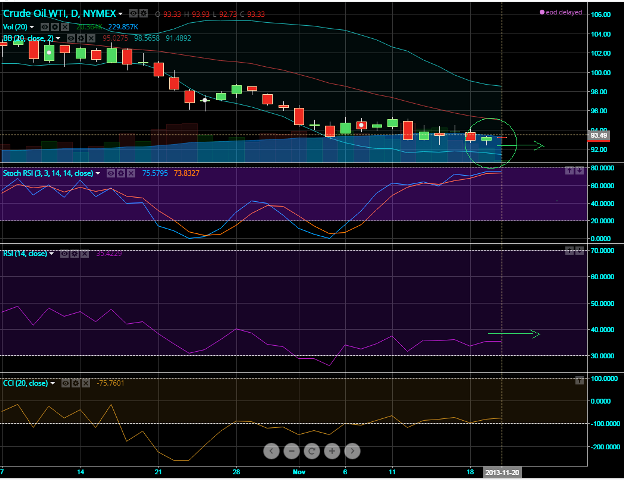
Technicals indicate near term gains are under way, on a daily chart we can figure out hammer pattern formed on downswings which is a bullish signal. For better confirmation both price and RSI curves are in sync as they are moving convergence. At current price levels of WTI crude trading at US$ 57.74, one can add long futures positions of crude WTI on every dip.