


 Apple Supplier Luxshare Faces US Patent Probe, Sees Limited Impact
  Epic Games Delays Disney Shooter, Shifts to AI-First Development
  Nvidia’s China AI Chip Market Share Falls to 34% as Huawei Gains Ground
  Samsung, SK Hynix Shares Fall as China's CXMT Advances DRAM Technology
  Moonshot AI Executives Seek Settlement Ahead of Hong Kong IPO
  FAA Warns US Airlines Over Saudi Arabia Flight Risks
  Orsted to Take Full Ownership of UK Offshore Wind Farm for £15 Million
  Samsung, SK Hynix Shares Plunge as China Chip Competition Grows
  Elon Musk Donates $366 Million to 2026 US Midterms
  Hong Kong’s Second Solana ETF Launches With Lower Fees
  Nasdaq Faces Pullback to 26,225 Despite Bullish Outlook, UBS Says
  Binance to Shut Down Crypto Mining Pool Services on November 10
  Russia Approves Sberbank for Crypto Exchange Services
  TSMC Profit Set to Surge 65% as AI Chip Demand Drives Record Earnings
  Albertsons Seeks $9.3 Billion From Kroger Over Failed Merger
  Morgan Stanley Predicts $10 Trillion RWA Market by 2030
  Arthur Hayes Announces FLOP Testnet Launch Within Weeks


 Add as a preferred source on Google
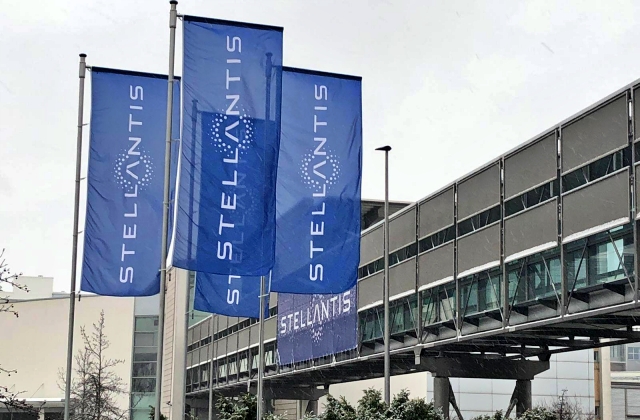
Stellantis is reportedly mulling on shutting down one of its production facilities in its Melfi plant located in Italy. This information was revealed by the head of FIM CISL, an Italian Federation of Metal Mechanics trade union that represents metal and engineering workers in the country.
Why Stellantis is thinking of closing its production line
As per Reuters, Stellantis’ Melfi car factory is mostly producing Jeep’s Renegade and Compass model units in addition to Fiat 500X, a compact sports utility vehicle. The place is also considered as the company’s most efficient factory in Italy, however, the bosses thought that they could just merge its two production lines into one.
This means closing one of the production lines and moving all the manufacturing processes to the other for the company to cut costs. It was added that getting rid of one line is the company’s chief executive officer Carlos Tavares’ first step in addressing the excess capacity issue in Italy.
The CEO is making a move after Stellantis’ production in Italy has come under scrutiny for costing more compared to the others. This is because the automaker has been seeking over $5.9 billion or €5 billion a year in savings after the company was formed recently through the merging of Fiat Chrysler and PSA Group.
It was added that scaling down plants has been recognized as one of Tavares’ business strategies that have worked when he helped Peugeot get back to its feet when it was already close to bankruptcy years ago. Thus, it seems that this same method is being applied for Stellantis’ benefit this time around.
The CEO’s plan
Based on the report all of the company’s factories that are manufacturing less than 250,000 units per year vehicles will have one of their production lines shut to save and at the same time maximize the production capacity at the other line.
Ferdinando Uliano, the FIM CISL’s head, said that although Stellantis is already assessing the option to close one line in some of its plants, it has not made a solid decision yet. He added that the carmaker has yet to issue an official confirmation to the union with regards to its final resolution. The union is hoping that Stellantis will not close some lines as they don’t want any job cuts.
Meanwhile, the company has already devised other strategies to cut costs without laying off workers. It was reported that Stellantis is instead cleaning services, reducing energy consumptions and limiting the number of toilets available to staff.
The last-mentioned cost-cutting is raising eyebrows as it is a really odd way to reduce expenses. Stellantis said that since it made a promise to keep jobs, it is trying to figure out ways to stick to its commitment, thus it would rather reduce the toilets than getting rid of some workers.







